

Snow & Ice
The Nature of Reading Newsletter | Winter | January 25, 2026

Dear readers,
Welcome back to another newsletter.

It feels hard to write anything at the moment, watching the snow falling heavy outside our windows and reading news about ICE’s latest terrors spread throughout the US and within our own county.
Still, I wanted to send out this newsletter to remind everyone, remind myself, that building a better world is possible. One where children are not kidnapped, people are not murdered in the streets, and where we are not repeatedly told that what we can see with our own eyes is not the truth. The books recommended at the end of this newsletter acknowledge the horrors of our world while laying out the paths we can take to usher in a new, more just, reality.
Staying inside all day with the snowstorm can easily devolve into doom-scrolling. In addition to reading, here are three things you can do instead (picking even one is an amazing step in converting distress into action)
Follow Cosecha NJ on Instagram and save their number (888-347-3767 for Morris County) to report seeing any ICE activity
Call 202-224-3121 and ask to be connected to Cory Booker and Andy Kim (two separate calls) or your relevant senators if you live outside of NJ. Use this script to let them know you don’t support the further funding of ICE that the Senate will soon vote on
Follow Mutual Morris (or your local mutual aid group) to learn more about their work and what they need to better support our communities
No matter what the near future holds, we can get through this together. Please join us at one of our upcoming free events, or stop by the store this week at any point to talk more about these topics in person.
All best wishes,
Hailey

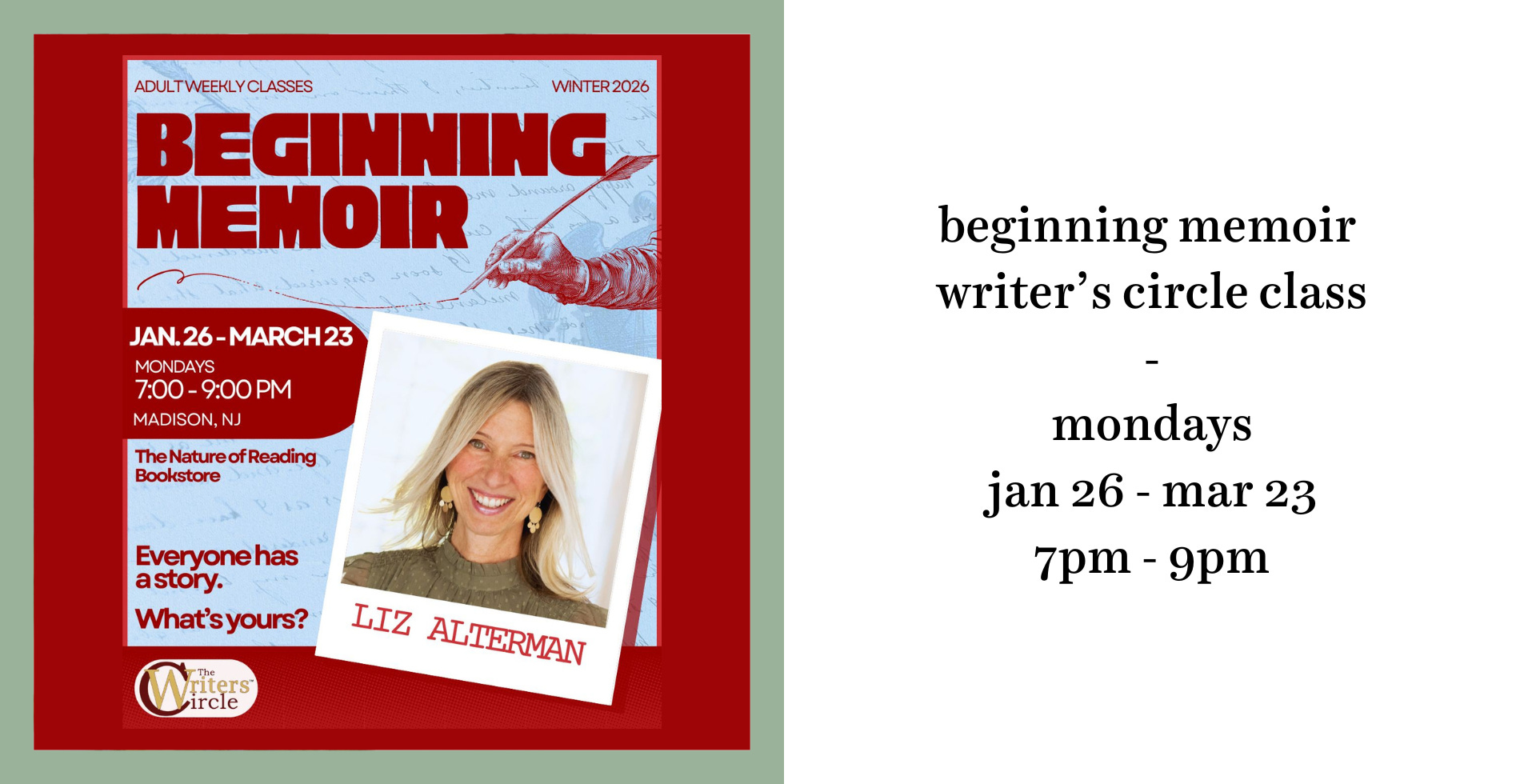
We’re pleased to be hosting another Beginning Memoir class this winter led by the lovely author Liz Alterman. From The Writer’s Circle website: “Every person has a story. What is yours? Memoir writing is the process of adapting your true-life experiences in a way that reads like fiction. Whether your writing goal is personal, in essay form, or an entire book, this class will give you the tools you need to develop and strengthen your writing process. Through prompts, supportive round-table discussions, and constructive critique, we will explore how to structure stories, develop the skills that bring them to life, and show how to enhance your writing.” Sign up here to join the class—it will be meeting at the shop every Monday evening.
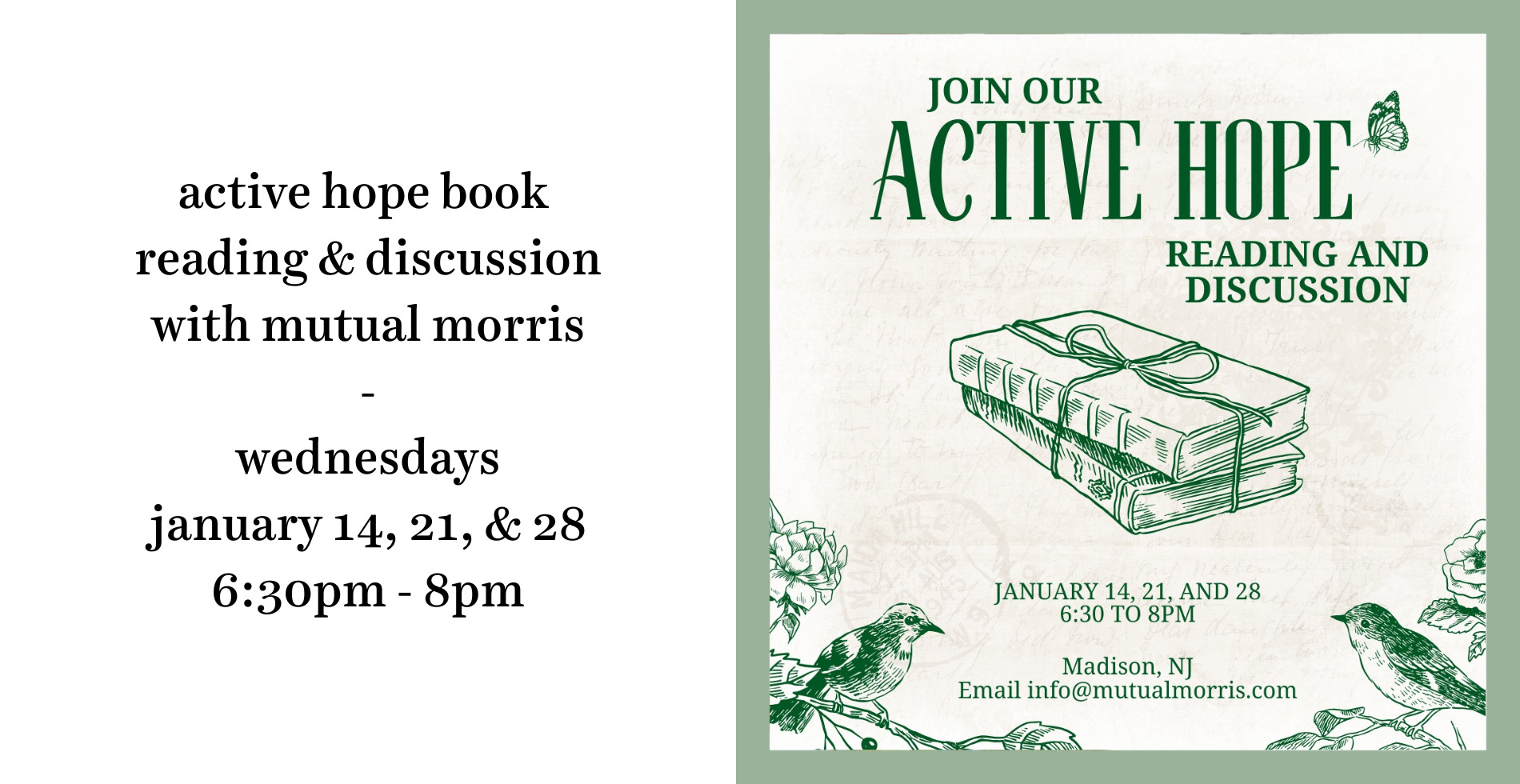
Even if you weren’t able to make it last two meetings, we’d still absolutely love to see you this Wednesday at Mutual Morris’s next discussion of Active Hope, Part 3. While the vastness of the planetary polycrisis can often be overwhelming, working together to support the people closest to you in your community is one of the best ways to be able to weather any storm and one of the most effective ways to make a difference in the climate crisis. Learn more about mutual aid and how to turn eco-anxiety into active hope with us this month. These events are free and open to all—just reply to this email if you’d like to join us so we can get an estimate of attendees beforehand. We hope to see you there!

Next weekend is the first meeting in our exciting collaboration with Cora Hartshorn Arboretum & Bird Sanctuary—a new book club called The ArboReaders (could they have chosen a more perfect name?). Join us each season to read a nature book and have the coziest of discussions at the beautiful Arboretum. For the winter season, we’re reading The Courage of Birds: And the Often Surprising Ways in Which They Survive Winter by Pete Dunne. You can pick up a copy of the book at the shop if you’d like to buy one, but the event is free and open to all! Sign up here.

We’re back with another crafting event for next month! This month we’ll have our first ever crochet event—we’ll be making this lovely mini heart garland, which makes a perfect decoration for Valentine’s Day and beyond. The kit even comes with a little box for gifting so you can give a garland to a loved one! We’d love to see you there next month.



In her astonishing, bestselling book Under the Sky We Make, Nicholas does for climate science what Michael Pollan did more than a decade ago for the food on our plate: offering a hopeful, clear-eyed, and somehow also hilarious guide to effecting real change, starting in our own lives. Saving ourselves from climate apocalypse will require radical shifts within each of us, to effect real change in our society and culture. But it can be done. It requires, Dr. Nicholas argues, belief in our own agency and value, alongside a deep understanding that no one will ever hand us power—we’re going to have to seize it for ourselves.
Here is a collection about living in and with the consequences of terrible mistakes—Held contemplates our collective experiences of loss in an age of climate change and mass extinctions, as well as more personal tragedies. Each essay in this book describes a remarkable instance of symbiotic mutualism: bobtail squid host glow-in-the-dark bacteria behind their eyes so they can camouflage with moonlight on the water; there is a surprisingly erotic encounter between ants and a rove beetle; beavers and willow trees together turn deserts to verdant wetlands; and many more. To read Held is to be reminded of one’s humanity and of our interconnectedness with the world that surrounds us.
In social movements, some heartbreaks are all but inevitable. Campaigns will be lost. Mental health crises will occur. Social ills, like gender-based violence, will manifest themselves in movement spaces. People will experience profound personal losses. Grief, alienation, and despair can grind us under. Sometimes, we need accompaniment. Sometimes, we need to be met where we’re at by a caring voice of experience. Read This When Things Fall Apart is a care package for activists and organizers building power under fascistic, demoralizing conditions. It’s an outstretched hand, offering history lessons, personal anecdotes, and practical advice about how to navigate the woes of justice work. A survival guide for the heart, this is a book for activists to keep close, and to share with co-strugglers in need.

We have our January book club meeting on Tuesday, but here is our book for February!
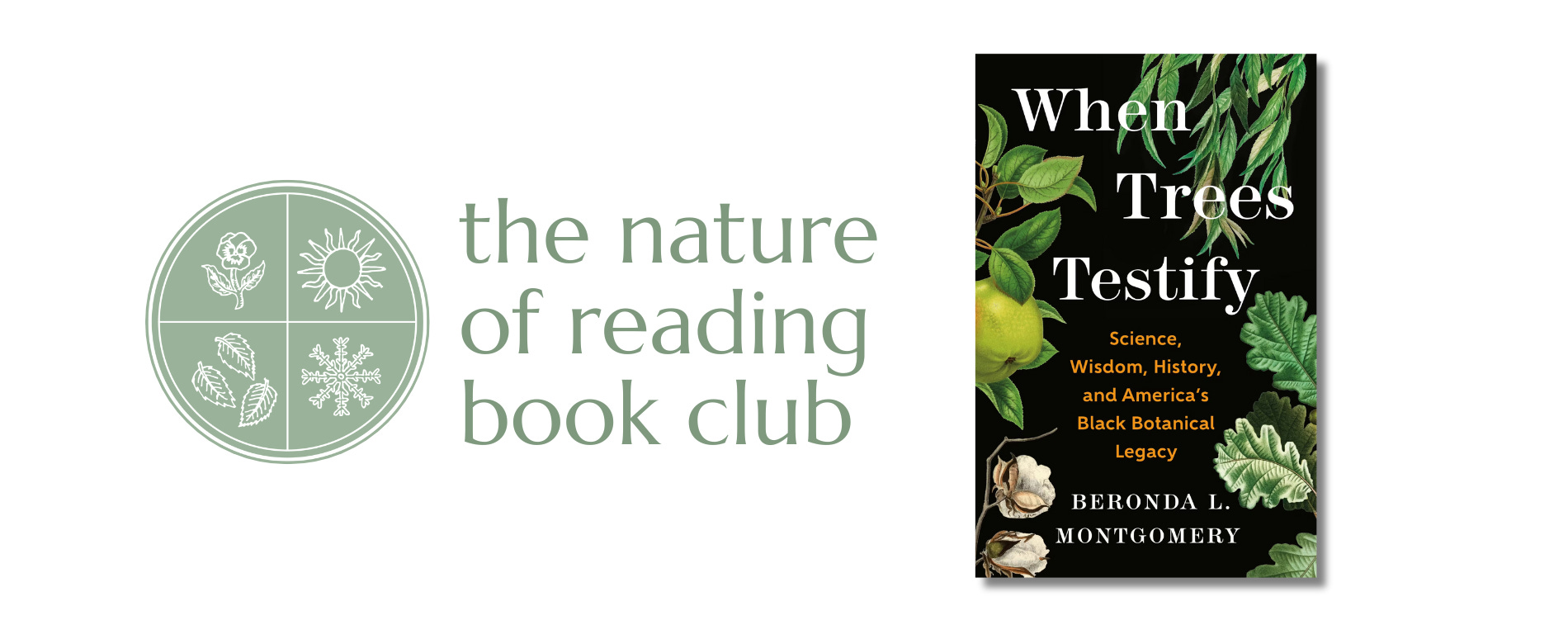
For February we’ll be reading When Trees Testify: Science, Wisdom, History and America’s Black Botanical Legacy, a captivating blend of memoir, science writing, and history from plant biologist Beronda L. Montgomery. Learn more about the deeply rooted history of Black botanical expertise and the ways that knowledge has shaped the United States since its very foundation. Writing about everything from Pecan trees being domesticated by an enslaved African named Antoine to the use of willow bark as medicine, Montgomery weaves together the rich history of Black botany, her own deeply personal experiences, and her wide-ranging scientific knowledge into this beautiful book.

We can move forward from these times to build a better world.
Let’s dream together.


Sometimes the bravest thing we can do while facing an existential crisis is imagine life on the other side. This provocative and joyous book maps an inspiring landscape of possible climate futures. Through clear-eyed essays and vibrant conversations, infused with data, poetry, and art, Ayana Elizabeth Johnson guides us through solutions and possibilities at the nexus of science, policy, culture, and justice. If you haven’t yet been able to picture a transformed and replenished world—or see yourself, your loved ones, and your community in it— this book is for you. If you haven’t yet found your role in shaping this new world, or you’re not sure how we can actually get there, this book is for you. With frankness, humor, and humanity, Ayana invites readers to ask and answer this crucial question, together: What if we get it right?
The most startling thing about disasters, according to award-winning author Rebecca Solnit, is not merely that so many people rise to the occasion, but that they do so with joy. That joy reveals an ordinarily unmet yearning for community, purposefulness, and meaningful work that disaster often provides. A Paradise Built in Hell is an investigation of the moments of altruism, resourcefulness, and generosity that arise amid disaster’s grief and disruption and considers their implications for everyday life. It points to a new vision of what society could become—one that is less authoritarian and fearful, more collaborative and local.
What would our activism look like if time travel were possible? How to Fall in Love with the Future is the result of Hopkins’s deep dive into the people and movements throughout history who have used visions of the future to inspire positive change on a large and dramatic scale. From the life and writings of musician Sun Ra and the history of Black utopian movements to the latest neuroscience on what goes on in our minds—and hearts—when we “time travel,” Hopkins brings essential new thinking to anyone overwhelmed with dread and anxiety for the future. He asks us to consider: what would the world look like if we all got to work imagining—and then building—a world we were deeply in love with?


The challenges we face can be difficult even to think about. Climate change, war, political polarization, economic upheaval, and the dying back of nature together create a planetary emergency of overwhelming proportions. This revised, tenth anniversary edition of Active Hope shows us how to strengthen our capacity to face these crises so that we can respond with unexpected resilience and creative power. Drawing on decades of teaching an empowerment approach known as the Work That Reconnects, the authors guide us through a transformational process informed by mythic journeys, modern psychology, spirituality, and holistic science. This process equips us with tools to face the mess we’re in and play our role in the collective transition, or Great Turning, to a life-sustaining society.
Changing the world is difficult. One reason is that the most important problems, like climate change, racism, and poverty, are structural. They emerge from our collective practices: laws, economies, history, culture, norms, and built environments. The dilemma is that there is no way to make structural change without individual people making different—more structure-facing—decisions. In Somebody Should Do Something, Michael Brownstein, Alex Madva, and Daniel Kelly show us how we can connect our personal choices to structural change and why individual choices matter, though not in the way people usually think. Neither a how-to manual nor an activist’s guide, Somebody Should Do Something pairs stories with science (plus some jokes) to help readers recognize their own power, turning resignation about climate change and racial injustice into actions that transform the world.
Inspired by Octavia Butler’s explorations of our human relationship to change, Emergent Strategy is radical self-help, society-help, and planet-help designed to shape the futures we want to live. Change is constant. The world is in a continual state of flux. It is a stream of ever-mutating, emergent patterns. Rather than steel ourselves against such change, this book invites us to feel, map, assess, and learn from the swirling patterns around us in order to better understand and influence them as they happen. This is a resolutely materialist “spirituality” based equally on science and science fiction, a visionary incantation to transform that which ultimately transforms us.