

Looking Back
The Nature of Reading Newsletter | Spring | Week 13

Dear readers,
Greetings from what is (hopefully) the return of our weekly newsletters! So much has happened in the last few months, a lot of which I’ve shared with you in person, but I haven’t had the chance to share as much in this newsletter. So that’s what we’re going to do today!
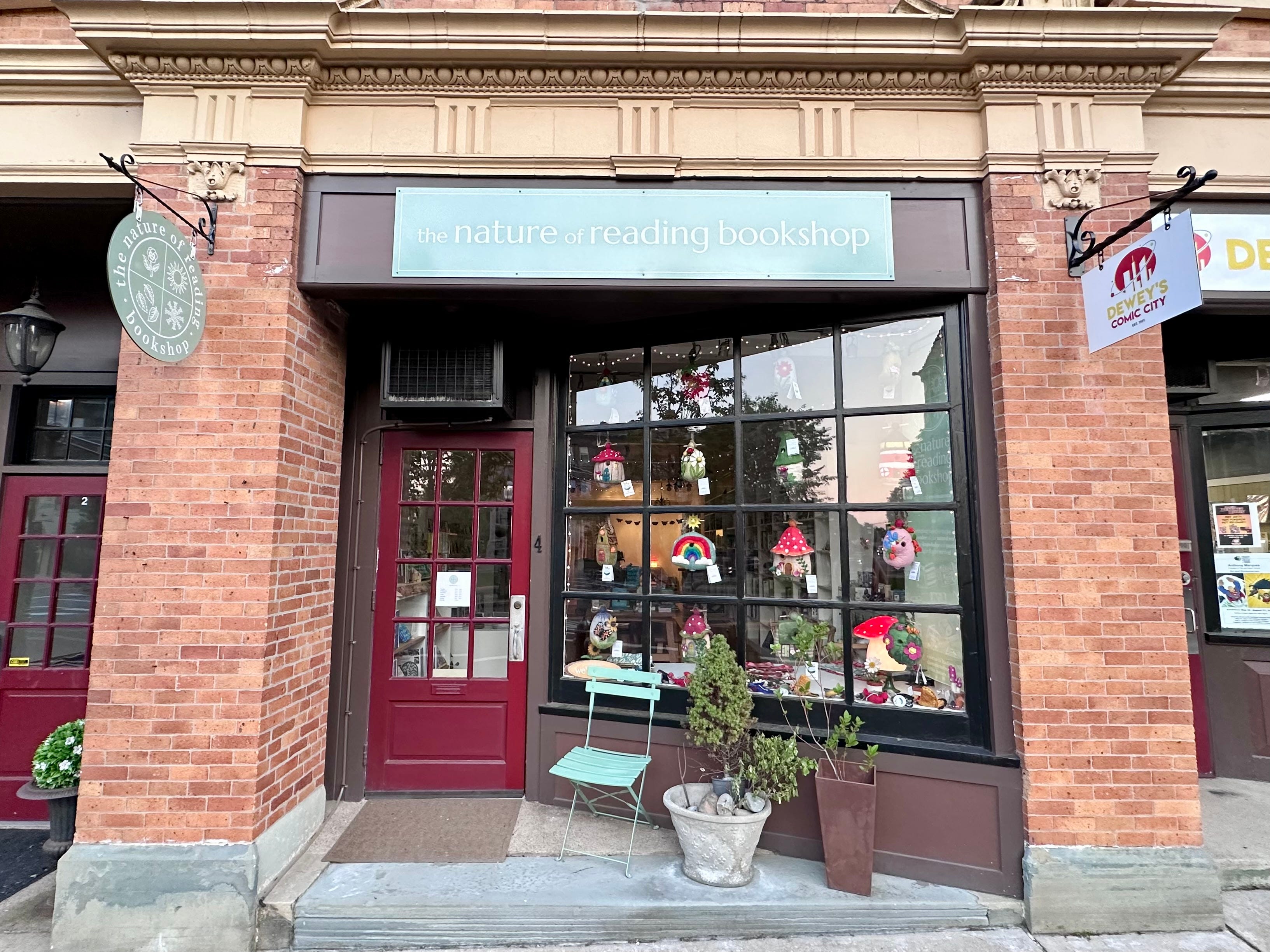
There were countless big and small moments of note in the past two months, moments which would require pages upon pages to describe, so I’ve tried to curate just a few of the highlights here.
Highlight #1 | The book brigade & soft opening at the new shop
April 26th
Thanks to another bookstore in Michigan moving about a week before us and going viral with this awesome idea of a book brigade, I had so many people asking if we would do the same thing to move our store! So at 5pm on Independent Bookstore Day, at the end of the soft opening of the new space, we finished off the day by passing along all the books from the old store to the new. Since we had to cross the busy Main Street intersection to get from one side to the other, we had two brigades set up on either side of the street and wagoned the books across the intersection. It was a great success—moving all of the books from the old shop only took about 45 minutes! I'm so very grateful to everyone who came out that day and helped us form the book brigade.
Highlight #2 | Saying goodbye to the old shop
April 30th
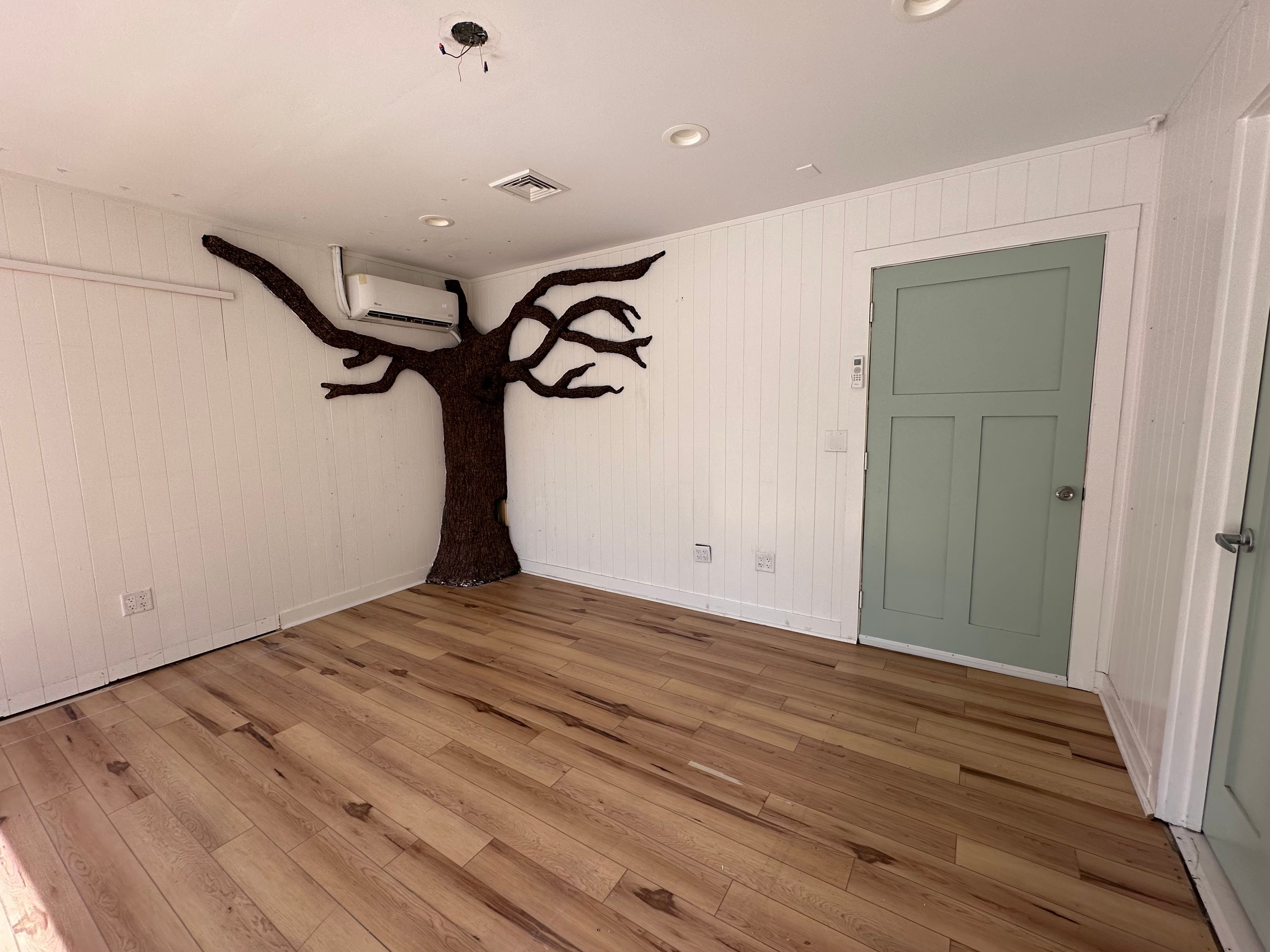
Moving all the final bits of furniture out of the old shop so I could turn in my keys that evening was one of the hardest days I’ve had in the shop moving process. While my family and family friend Charlie helped immensely by the moving over the biggest furniture pieces, the final readying of the space to return it to the landlord felt like a race against the clock. So many of you have asked me at the shop, but sadly the tree did not make the move with me. I knew that since I built it directly onto the wall, it would be impossible to remove without destroying it. But fear not—I kept a small piece of it, and I have many new trees in the works for the new space. Since the moving process had been ongoing for a few weeks, it didn’t feel as melancholy as I thought it would to say goodbye to the first shop. It was the perfect little place for me to experiment with and then establish my ways of running a storefront, but after two years I was looking forward to having more space to grow into. Since I used to work in The James Building at The Chatham Bookseller for many years, moving into the new space felt like coming home.
Highlight #3 | Ribbon cutting at the new shop
May 17th
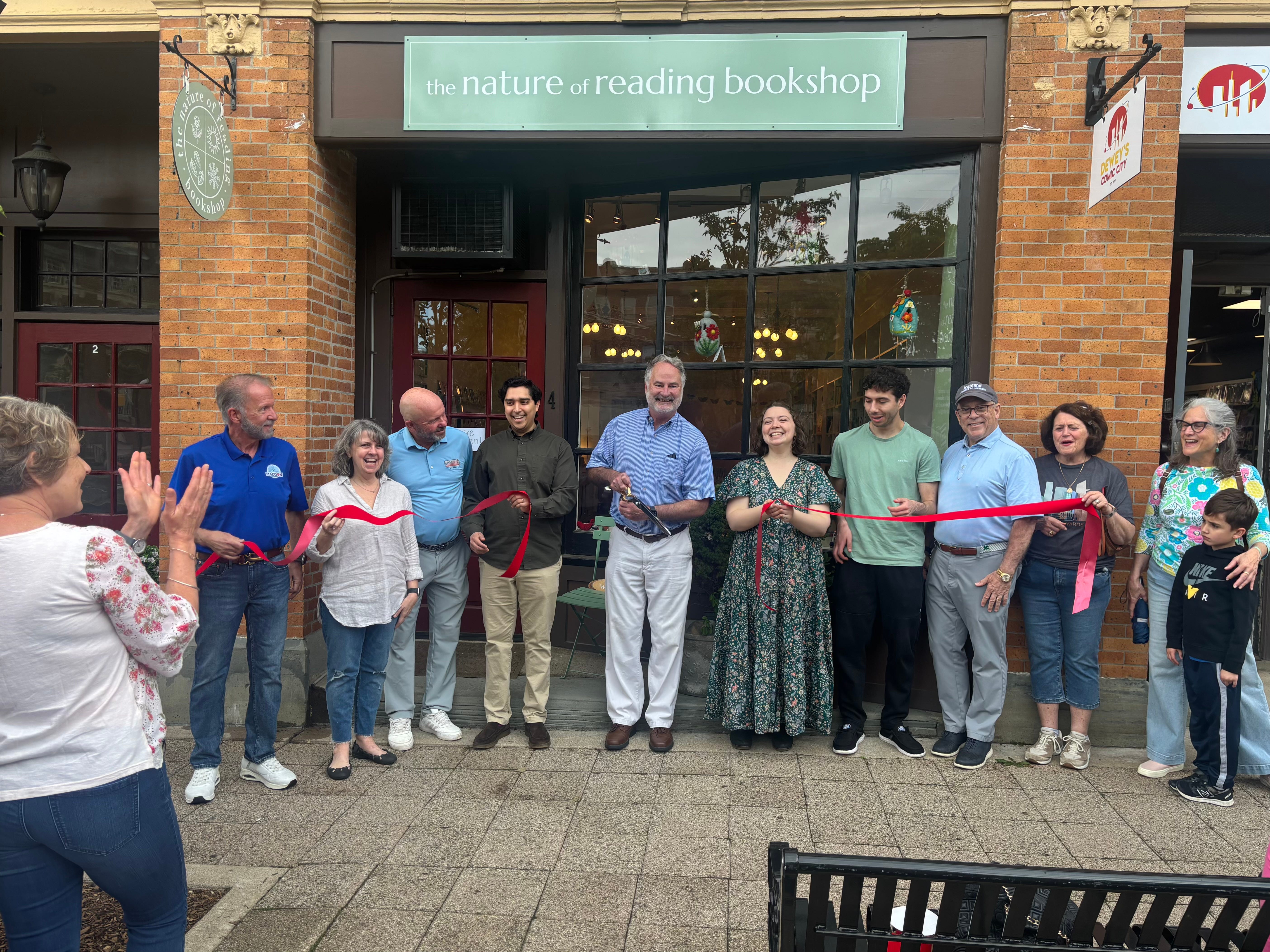
A few weeks after the soft opening, we came together for the ribbon cutting at the new shop! It was wonderful to see all my friends and family who had been with me for the first ribbon cutting at the old space show up to help me commemorate the new space. It was wild to reflect on how nearly two years to the day after I opened my first storefront, I had the fortune and honor to move into my dream location and expand our stores offerings three-fold.
Highlight #4 | Inaugural NJ Bookstore Crawl
June 7th & 8th
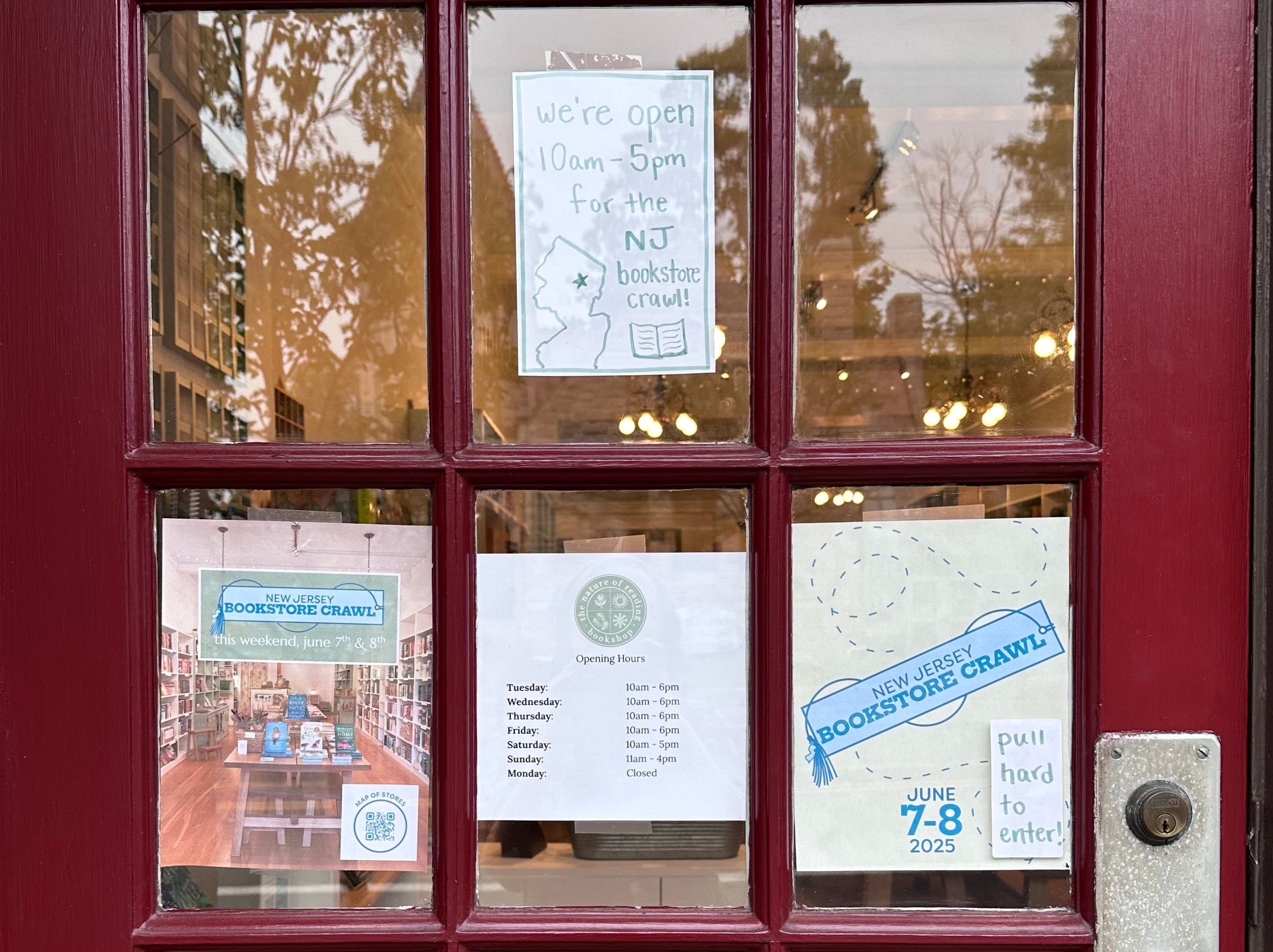
Last weekend was the first ever statewide NJ Bookstore Crawl, and most definitively our busiest weekend ever at the shop! We were so happy to be part of this amazing event organized by Jersey Collective, and to welcome hundreds of new readers into our store over the course of the two days. It was life-affirming in times like these to realize just how many people around us love reading, and to see how nature and climate titles sold just as well as fiction. I so look forward to welcoming more people into our community.
That covers most of the major moments from the last two months, and perhaps next week I’ll dive into the weedy behind-the-scenes nature of it all…but until then, I wish you all a Happy Father’s Day (we’re closed at the shop today!) and I’ll see you back here next week.
All best wishes,
Hailey

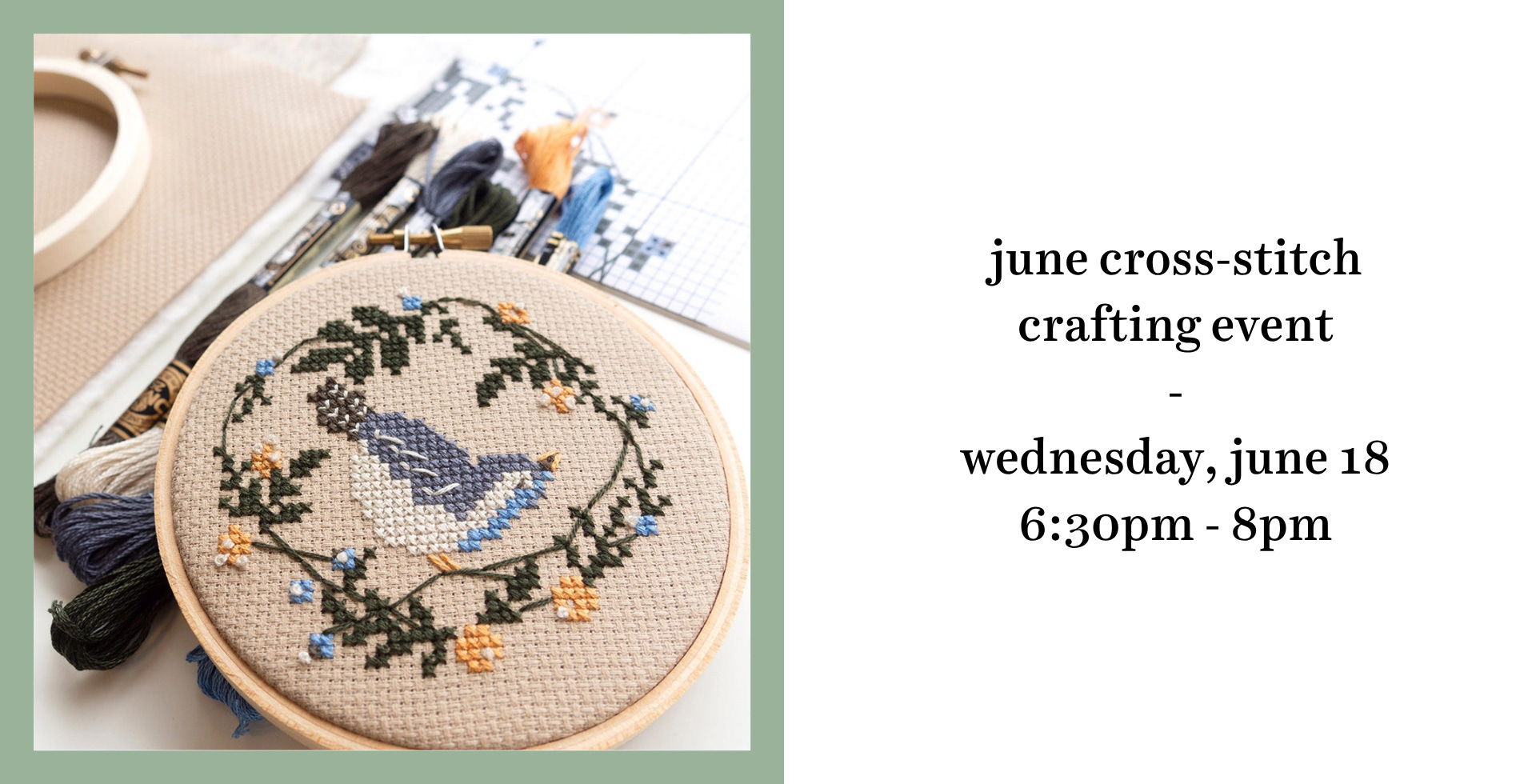
We’d love for you to join us for our first ever crafting event at the new space! Whether you’ve cross-stitched with us for the fall and winter birds or whether it’s your first time, I’m happy to help all levels of crafters get started on this sweet cross-stitch project as we sip soothing cups of herbal tea. There’s a limited number of seats, so do get your ticket now if you know you’d like to attend! Come check out the new space if you haven’t been—grab a friend and join us for this wholesome evening of crafting, tea, and great company.
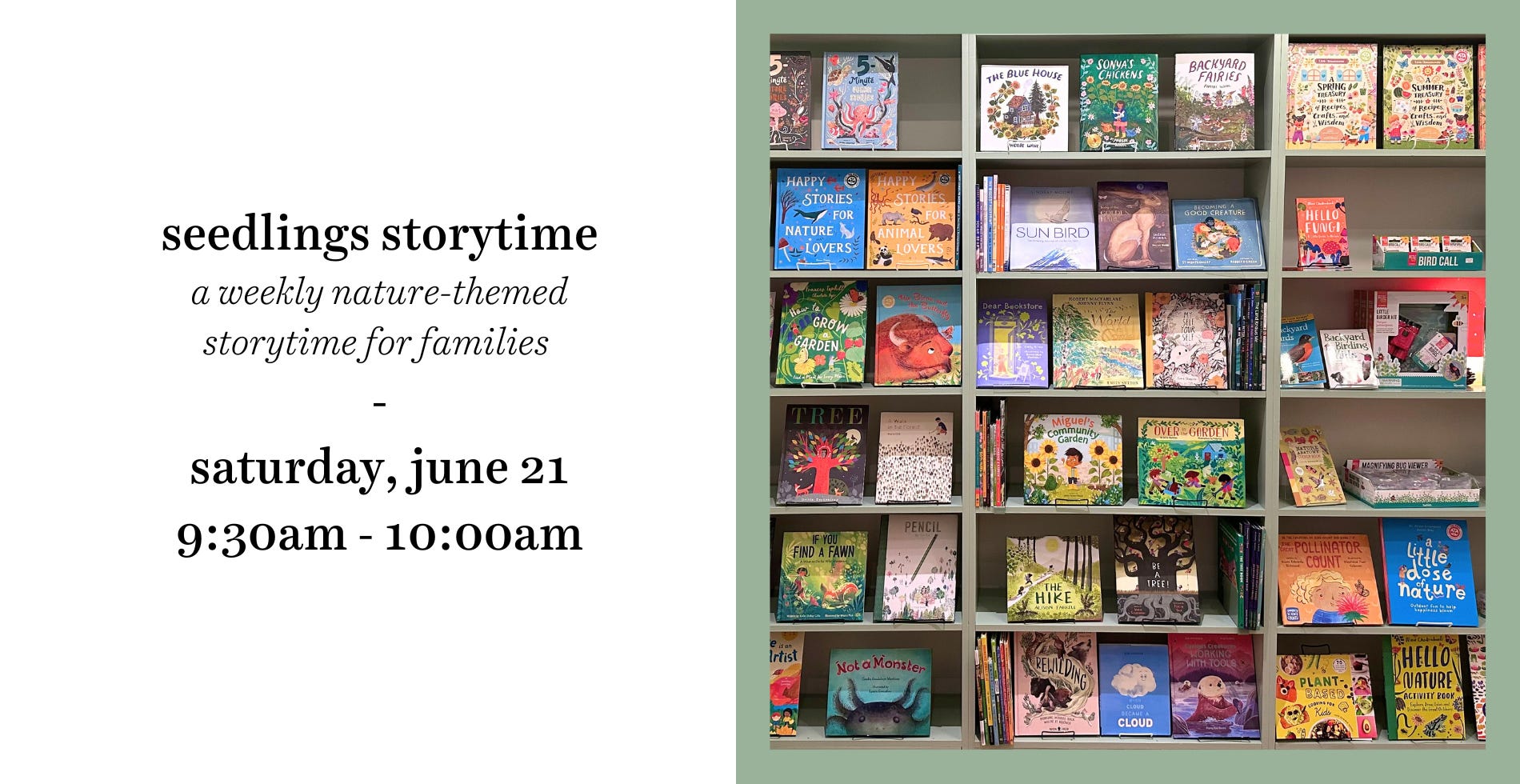
We’re very excited to announce a new weekly event at The Nature of Reading—Seedlings Storytime! Join our bookseller Jo on Saturday mornings each week as she reads nature-themed picture books to the kids. The storytime is recommended for 5-year-olds and younger, but all are welcome to attend! The event is free, but registration in advance is required (due to space, we can only fit about 4-6 families). We hope you can join us for the first storytime on Saturday!



From a pair of male swans raising young to splitgill mushrooms with over 23,000 mating types, sex in the natural world is wonderfully diverse. Josh L. Davis considers how, for many different organisms—animals, plants, and fungi included—sexual reproduction and sex determination rely on a surprisingly complex interaction among genes, hormones, environment, and chance. Davis introduces us to fascinating biological concepts like parthenogenesis (virgin birth) and monoecious plants (individuals with separate male and female flowers), and also reveals animal and plant behaviors in nature that researchers have historically covered up or explained away. A Little Queer Natural History offers a larger lesson: that the diversity we see in our own species needs no justification and represents just a fraction of what exists in the natural world.
In the eighteenth century, two men dedicated their lives to the same daunting task: identifying and describing all life on Earth. Their approaches, however, could not have been more different. Carl Linnaeus, a pious Swedish doctor with a huckster’s flair, believed that life belonged in tidy, static categories. Georges-Louis de Buffon, an aristocratic polymath and keeper of France’s royal garden, viewed life as a dynamic swirl of complexities. Both began believing their task to be difficult, but not impossible. Stunned by life’s diversity, both fell far short of their goal. But in the process, they articulated starkly divergent views on nature and on humanity itself. With elegant, propulsive prose grounded in more than a decade of obsessive research, bestselling author Jason Roberts tells an unforgettable true-life tale of intertwined lives and enduring legacies, tracing an arc of insight and discovery that extends across three centuries into the present day.
Over millions of years, fig trees have shaped our world, influenced our evolution, nourished our bodies and fed our imaginations. Gods, Wasps and Stranglers weaves together the mythology, history and ecology of one of the world’s most fascinating—and diverse—groups of plants, from their starring role in every major religion to their potential to restore rainforests, halt the loss of rare and endangered species and even limit climate change.In this lively and joyous book, Shanahan recounts the epic journeys of tiny fig wasps, the curious habits of fig-dependent rhinoceros hornbills, figs’ connection to Krishna and Buddha, Jesus and Muhammad, and even their importance to Kenya’s struggle for independence. Ultimately, Gods, Wasps and Stranglers is a story about humanity’s relationship with nature, one that is as relevant to our future as it is to our past.

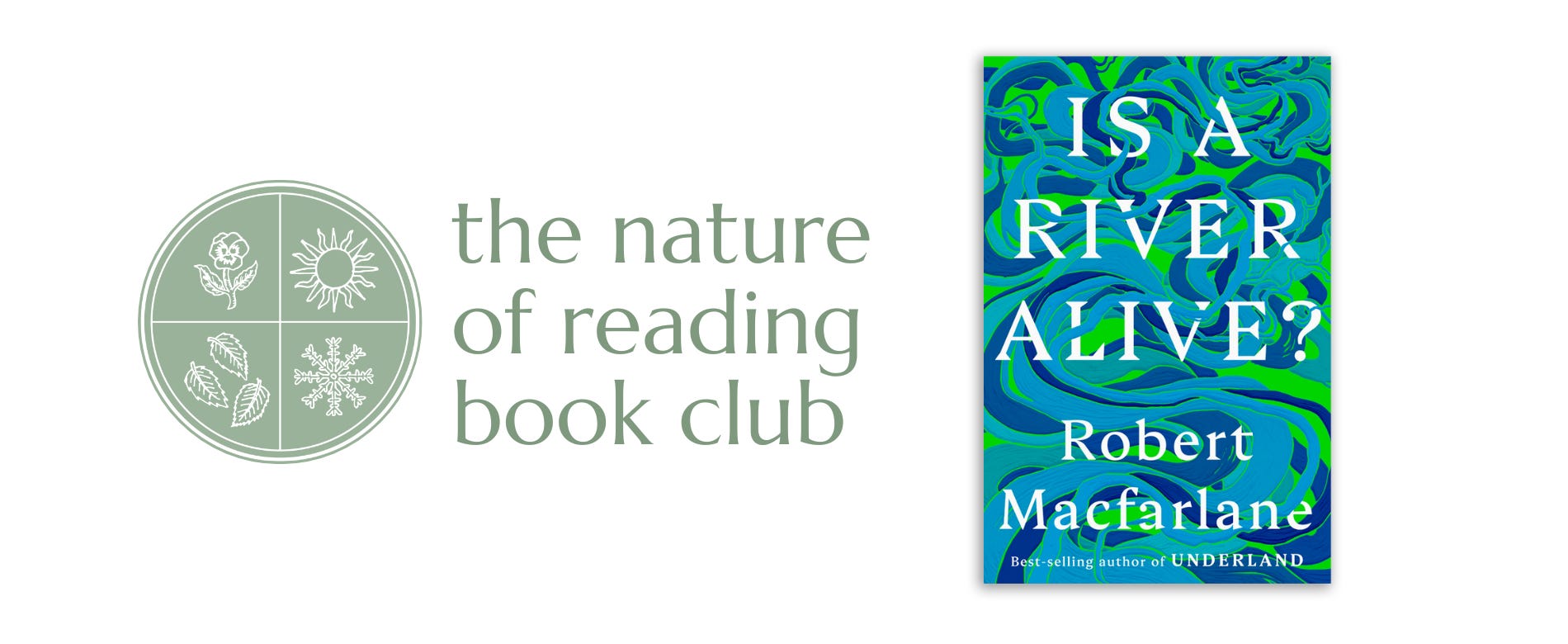
This month in The Nature of Reading Book Club we’re reading Is A River Alive? by Robert Macfarlane.
As soon as I started reading the first pages of this book, I knew it had to be our next book club pick. Robert Macfarlane writes as beautifully as ever, weaving nature writing, poetry, and history into a lyrical tapestry. By the end of the book, you’ll be able to truly appreciate just how alive rivers are.
We hope you can join us to read and discuss this stunning book—you can get your copy here.

We’ve been on a break due to the shop move, but fear not—Attending Together will be resuming next month with the release of our discussion of Jenny Odell’s works! Order your copies of How to Do Nothing and Saving Time and read along with us.



The River Has Roots by Amal El-Mohtar
Hailey says: “While looking for a book to listen to while I finished up some painting tasks around the shop, I remembered this little novella I had gotten as an ALC a few months ago. Within the first few minutes I was utterly enchanted by this world, where two sisters sing to ancient trees called The Professors and the magic of the land is built upon grammar and conjugation. The short book felt like a perfect gem, a gift for lovers of medieval British mythologies and Susanna Clarke. I immediately got the physical book to reread it, but would definitely recommend the music-filled audiobook as well, which you can purchase here.”
The Berry Pickers by Amanda Peters
Alison says: “This is the story of a Mi’kmaq family from Nova Scotia whose youngest daughter goes missing while they’re at work in the blueberry fields of Maine. The traumatic effects this has on the girl and her devastated family make for a gripping and very moving read.”
Jo says: “A recent five-star read, Martyr! follows Cyrus Shams, a young poet obsessed with martyrs. While working on a writing project, Cyrus has a series of conversations with an artist doing a project about her own death, and starts to uncover answers to some of the mysteries in his own path in the process. The novel spans different points of views, from Cyrus’ own, to members of his family, to his best friend. Coupled with discussions of artistry and poetry, Martyr! examines grief, addiction, and how we seek to give our lives meaning. Akbar’s writing is both lyrical and pointed; this is a novel that immediately demands to be re-read with a pencil in hand.”

If you’ve been at book club recently or have asked me about one of our new sections, you’ve probably heard the news: Mario and I along with some lovely friends have gotten a community garden plot this year! At first it felt like pure luck when I saw the post in the local Facebook group that there were still some plots left, but shortly after I had that knowing feeling that this is something we were meant to do.
And indeed, the garden has been a special oasis for all of us this spring. We cleared the incredibly overgrown plot and got to planning out what we wanted to grow, most of us being beginner gardeners. After the plans were made, I got to practice my growing interest in woodworking by building the garden beds and laying out the structure of the garden. Once we filled the beds with soil and all was planted, we’ve been delighted to watch the vegetables grow and see the progress of the seedlings over time. Since I started doing a lot of research into vegetable gardening, I knew I had to start a new section with all the great books I found! You can find just a few of the great titles from this new collection below, and you can stop by the shop to browse for more.


Rekha's Kitchen Garden: Seasonal Produce and Homegrown Wisdom from a Year in One Gardener's Plot by Rekha Mistry
Welcome to Rekha’s Kitchen Garden: a North London allotment that is bursting with the very best seasonal produce all year round. With more than 30 years’ experience as both an amateur and professional gardener, there is no better guide to home-grown produce than Rekha. Let her teach you the tricks and share the lessons she has learned from a lifetime of sowing, digging, and harvesting. This is a celebration of more than 40 seasonal crops that will inspire you to make the most of your allotment or kitchen garden. Whoever you are and whatever gardening experience you have, pick up a spade and join Rekha – so that you too can enjoy the very best of what each season has to offer.
Vegetables Love Flowers is an indispensable introduction to one of the oldest, yet most radical, ways to improve and beautify your vegetable garden. Planting vegetables and flowers together is one of the oldest ways to create a healthy, bountiful garden. Adding flowers to your food garden improves biodiversity, enhances pollination, and increases the numbers of beneficial pest-eating insects—with the bonus of providing beautiful bouquets of cut flowers to brighten your home and give to your family and friends. Vegetables Love Flowers explains the benefits of interplanting flowers and vegetables; offers detailed advice on how to add a cutting garden of vibrant annuals to your vegetable garden; gives profiles of a range of pollinators and beneficial predators; and provides plenty of general gardening guidance featuring natural methods.
Whether it’s water-usage restrictions, extended heat waves, disastrous flooding, “super weeds,” or prolonged pest lifecycles, the coming years will be filled with daunting challenges for food growers around the world. What’s a gardener to do? Author Kim Stoddart outlines a clear path toward building resilience in your vegetable plants, your soil, and yourself. With actionable tasks that reduce resource use, stabilize the garden’s ecosystem, and offer regenerative solutions to the most challenging issues faced by gardeners, Kim comes to the rescue with advice to help you weather these storms with ease.

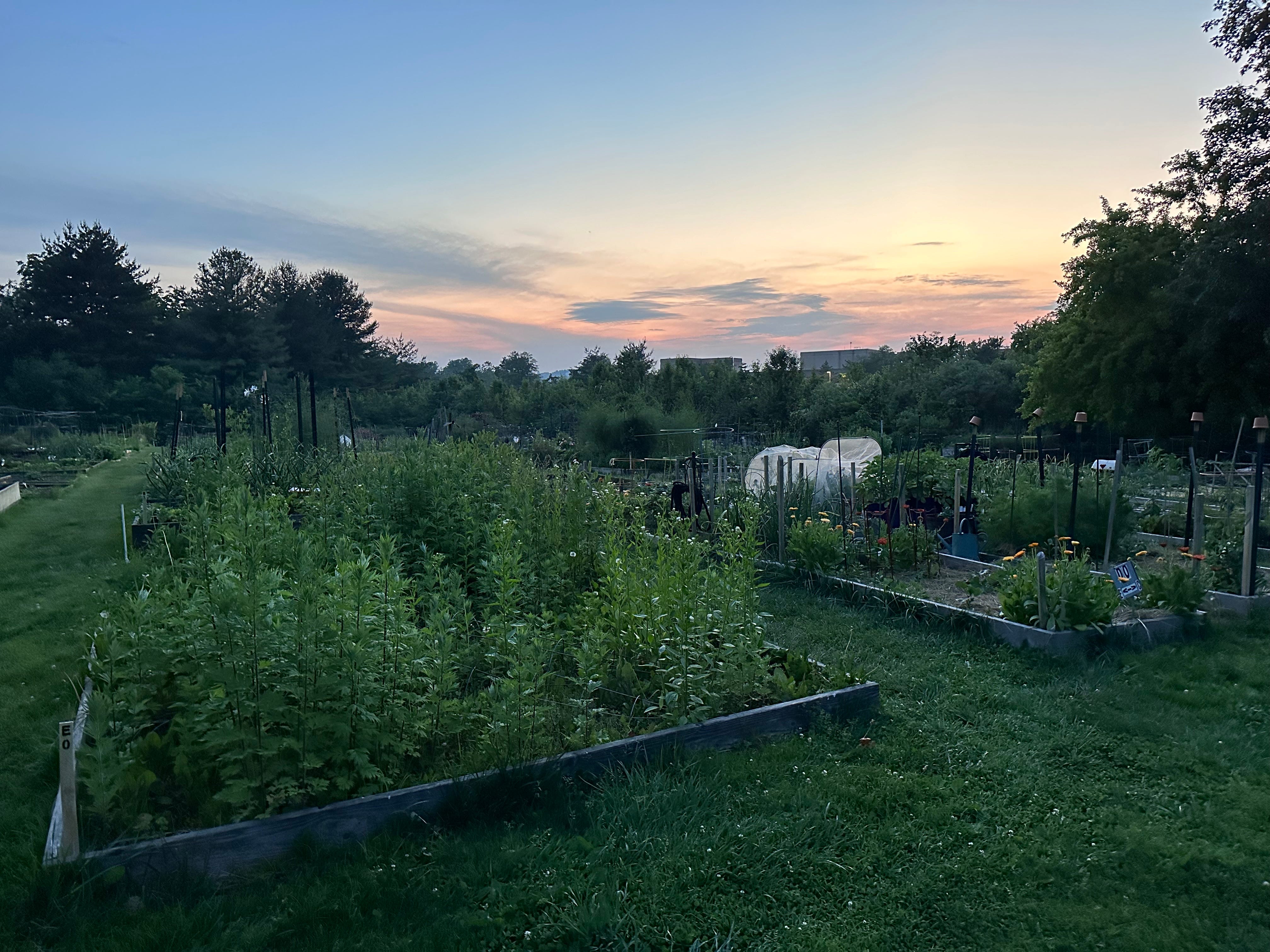
The sun setting over the community garden here in Madison. Looking over the expanse of the garden in the early evening has become our favorite way to refill our wells of magic and wonder and ready us for the next day.