

Hope is a Practice
The Nature of Reading Newsletter | Fall | Week 5

Dear readers,
This week I remembered exactly how easy it is to lose hope.
I’ve already written 10 different versions of this newsletter today, all delving into the unpleasantness of how Facebook and Instagram shaped my worldview this week, but none of it felt beneficial to anyone. So I’m going to skip all the messy details and get right to the part about hope.
An American friend living internationally recently asked me how I stay hopeful, when all the headlines and news are so dire.
I’ve spent the past week thinking about how to reply, while simultaneously trying my very hardest to not answer the social internet’s siren call of despair. And I think that effort speaks to the heart of it all: hope is a practice. It’s something that needs to be cultivated, again and again and again.
Our modern world has been designed, knowingly or not, to take our hope away from us. We work too much, grow tired and isolated, seek comfort in the dopamine hits of our screens that do nothing to build the foundations of actual contentment.
On the social internet, the attacks come from all sides. We see the horrors of those that wish to take away our most basic human rights, their opinions and actions wildly twisted through the mirror-world’s conventions into a mirage of self-victimhood. But those whose values align with our own can often be just as quick to call us out for not doing enough, not bringing attention to all the right things, doing things that seem beneficial but are actually extremely harmful and inconsiderate. Hours of consuming content from these extremes had me sitting on the floor of my office, wondering with frenzied desperation, what can I do to be good?
Of course, that is overly simplistic—we won’t get into the murky depths of what it means to be good here. But it felt that nothing I thought, did, or said, was even close to being good enough or worthy enough to match the horrors of our times. That feeling of hopelessness is dangerous: it slips easily into nihilism, inaction, or embracing the very values we try so hard to fight against.
As always, I have no concrete answers, no way to regulate one’s use of the social internet or extend empathy to the other side while also acknowledging that seeing people as less than human isn’t just “differing political views.”
What I do know is that the messy, endless, exhausting commitment to sustaining hope always feels better than the despair of giving up. It takes time and so, so much concentrated effort, but we are in a lifelong battle. Climate issues and political and social issues intertwine into a looming polycrisis, wielding its influence to demand our attention in all aspects of life.
We have to fight the despair that these crises bring. But how does sustaining hope work in practice? I’m reminded of something Pooja Lakshmin, author of Real Self-Care, wrote: “there are four categories of skills people use to build hope: problem-solving, emotion regulation, turning to relationships, and activating core identity.”
What I’m going to do today—and what I would encourage you to do—is pull our a journal and right these four categories of skills as four columns on the page. List actions you can take within each of those categories, such as volunteering with your local immigration rights group (problem-solving), physically limiting your social media use by putting your phone away in a drawer (emotion regulation), meeting a friend for coffee who you know has the same values (turning to relationships) or picking up a pile of old magazines and making a collage of things that bring you joy (activating core identity). Return to this list and choose one thing to do the next time you hear despair calling.
Hope is a practice, one that takes time, effort, and perseverance. But it is something that we cannot let go of if we want to build a just and equitable future.
“Hope” is the thing with feathers -
That perches in the soul -
And sings the tune without the words -
And never stops - at all -
Wishing you a hopeful week, and I’ll see you back here next Sunday.
All the best,
Hailey

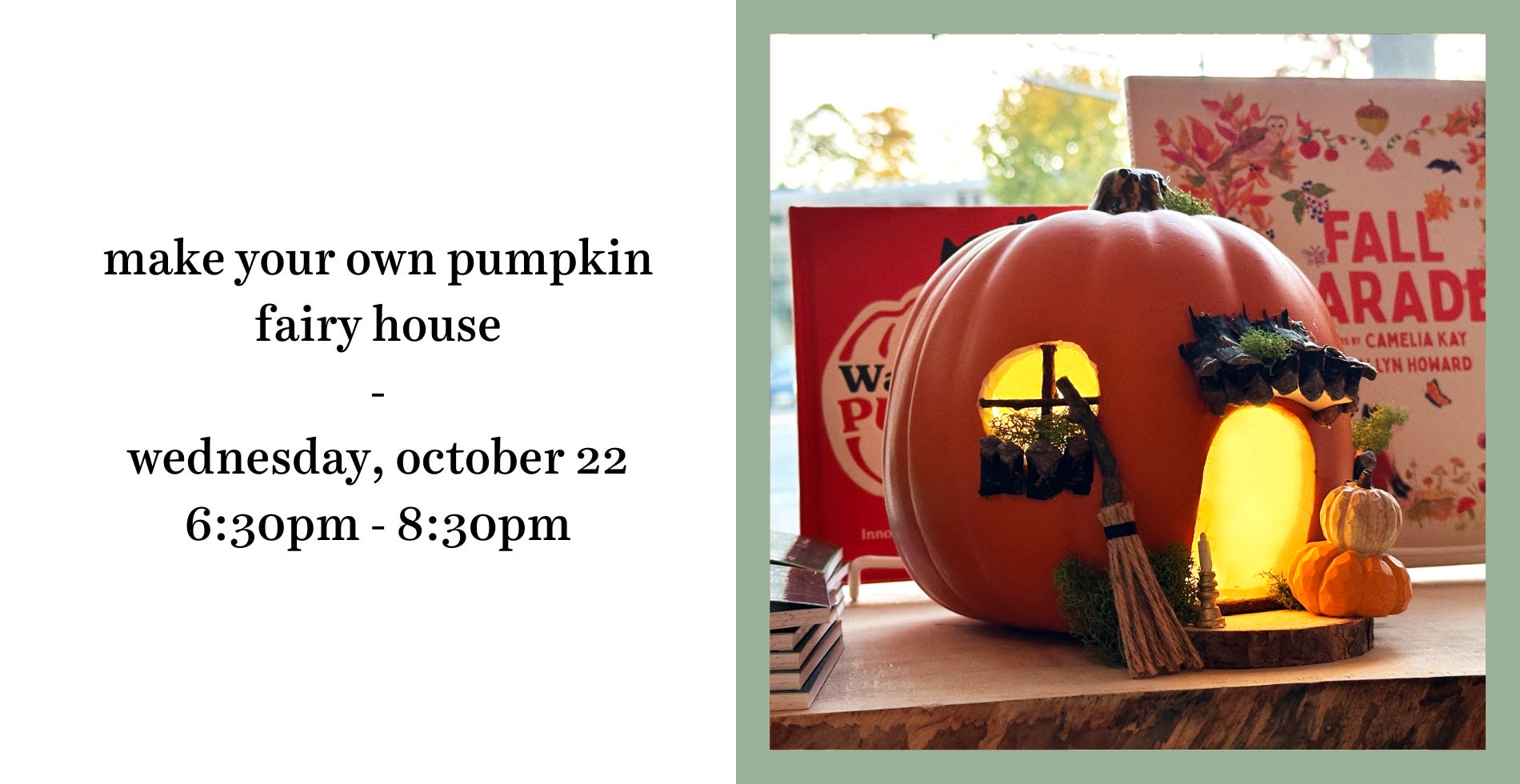
**Just a few spots left—get your ticket today!** Last year’s pumpkin fairy house event was so popular that we had to bring it back again this year! Join us for a relaxing, lightly spooky evening to create your very own whimsical pumpkin fairy house. You’ll receive your very own pumpkin to carve and a beeswax tea light to light the fairy home once you’ve finished. Throughout the night you’ll carve out doors, windows, and anything else you might like, plus you’ll have a wide selection of sticks, pinecones, branch slices, moss, and more to decorate with. We’ll be using homemade compostable glue to attach all the decorations so your pumpkin will be fully backyard compostable once the season passes. We hope you can join us for this fall favorite!
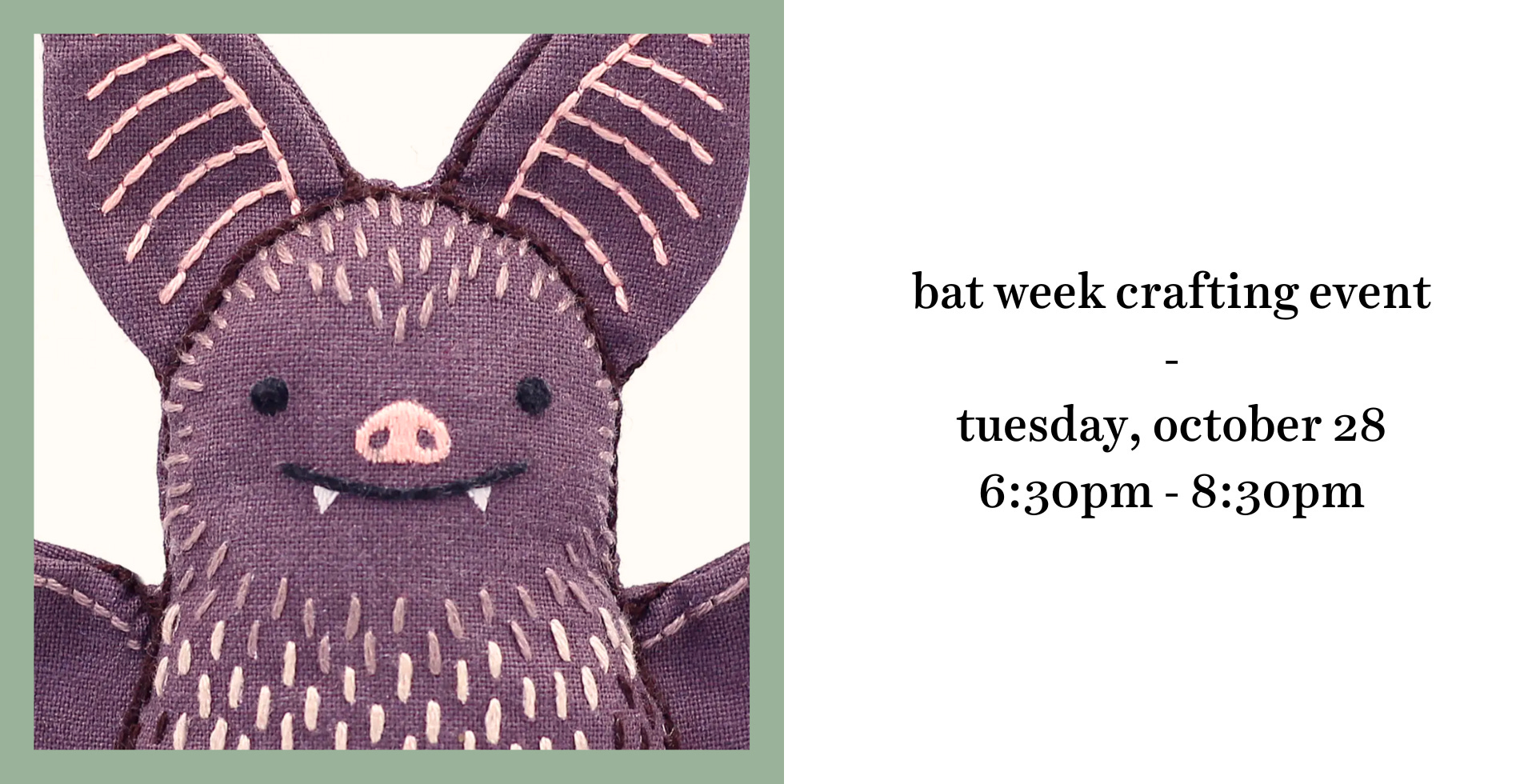
At long last, we’re doing an event using a kit from one of the shop’s most popular makers, Kiriki Press! These delightful embroidered dolls are about a hand tall and come together in the sweetest way. In honor of international Bat Week and to tie into our very exciting author event that we have the following evening, join us to start embroidering this sweet little bat and learn about all the steps you’ll complete to finish up the mini plushie.
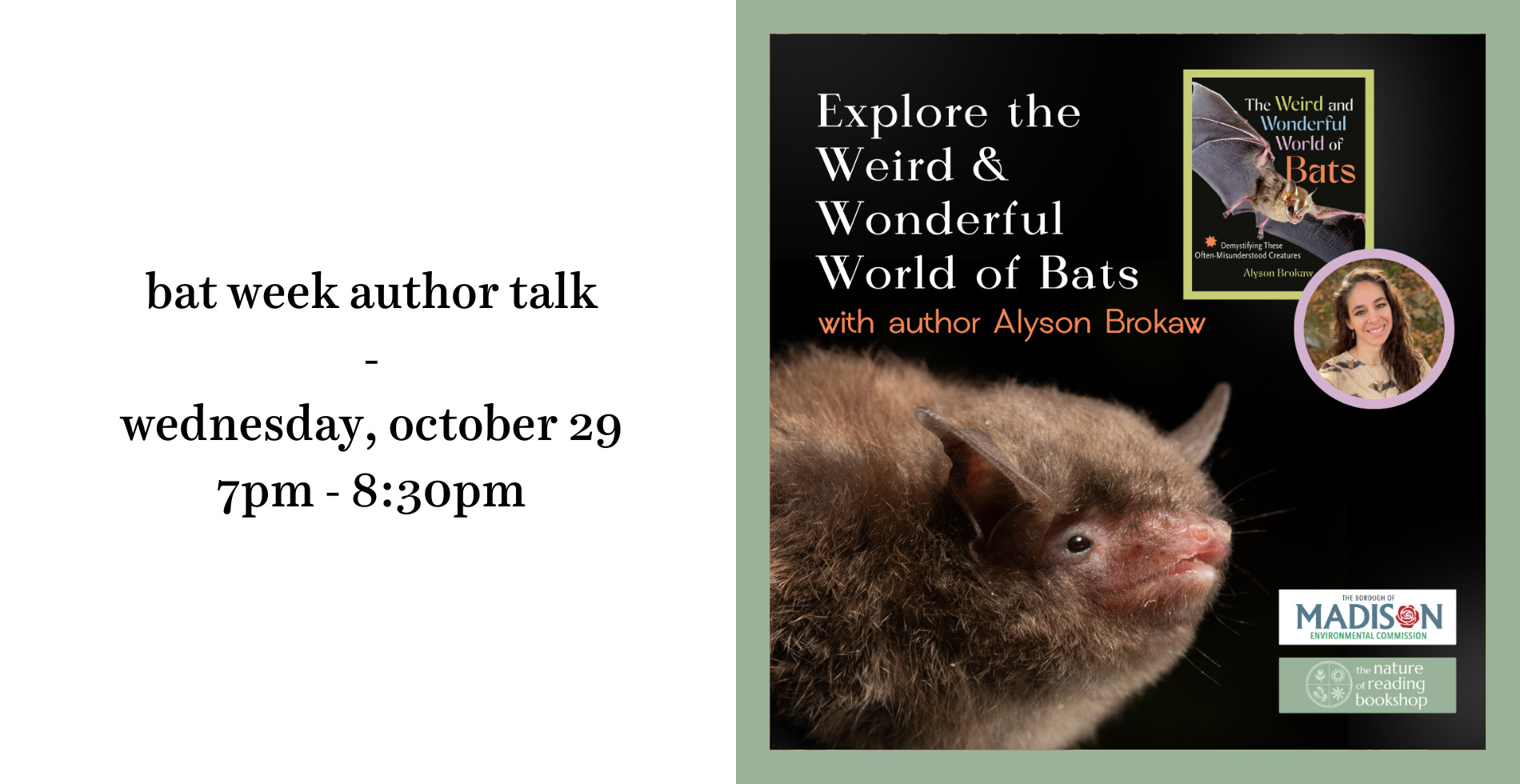
Our final event of the month is one of our most exciting—it’s the next installment in the Nature Lovers Speaker Series that we’ve been running with the Madison Environmental Commission! Join us on Wednesday, October 29th at the Chase Room at the Madison Public Library, where author of The Weird and Wonderful World of Bats Alyson Brokaw will be giving a talk about these often-misunderstood creatures. Learn more about the bats you can see in our area and about the important roles they play in their local ecosystems. Join us for a fascinating evening of delightful discovery as we learn more about these enigmatic mammals.



In an age of artificial everything, Worry Medicine offers something real: simple yet impactful practices that quiet the low hum of anxiety and awaken you to the web of support all around you. Open to any page and discover grounding practices, empowering perspective shifts that loosen old knots, and spiritual nourishment in the form of lush artwork. Through guided meditations, accessible art-making, grounding body movements, and time-tested rituals, you’ll cultivate resilience and discover how connecting with nature and living your purpose become sources of healing you can access anytime. Worry Medicine is an invitation to transformation, creating space inside yourself to nourish the vital seeds of personal and collective change.
Did you know that the world’s largest living organism is a fungus? Or that without fungi we would disappear under a mountain of dead leaves? Fungi are all around us, including in our gardens. From the vast mycorrhizal networks in the soil to the array of mushrooms that pop up overnight and the less welcome varieties that appear on our plants, we live surrounded by this fascinating, often hidden world. Beautifully illustrated, RHS Fungi for Gardeners is packed with information on how to identify fungi, why fungi are key to a healthy garden, and projects for growing your own mushrooms to eat or just enjoy!
Capture the delicate beauty of forest flora and fauna in watercolor through step-by-step instructions, traceable templates, and video tutorials. Designed for beginner and intermediate artists, Painting Woodland Watercolors covers all aspects of woodland painting, from understanding watercolor materials and techniques to creating detailed forest scenes. Each tutorial is designed to make learning accessible and enjoyable, with downloadable templates to help you get started, and QR codes linking to video tutorials for extra support. Rita’s detailed instructions and love for nature shine through on every page, encouraging you to explore and celebrate the beauty of the forest through art.

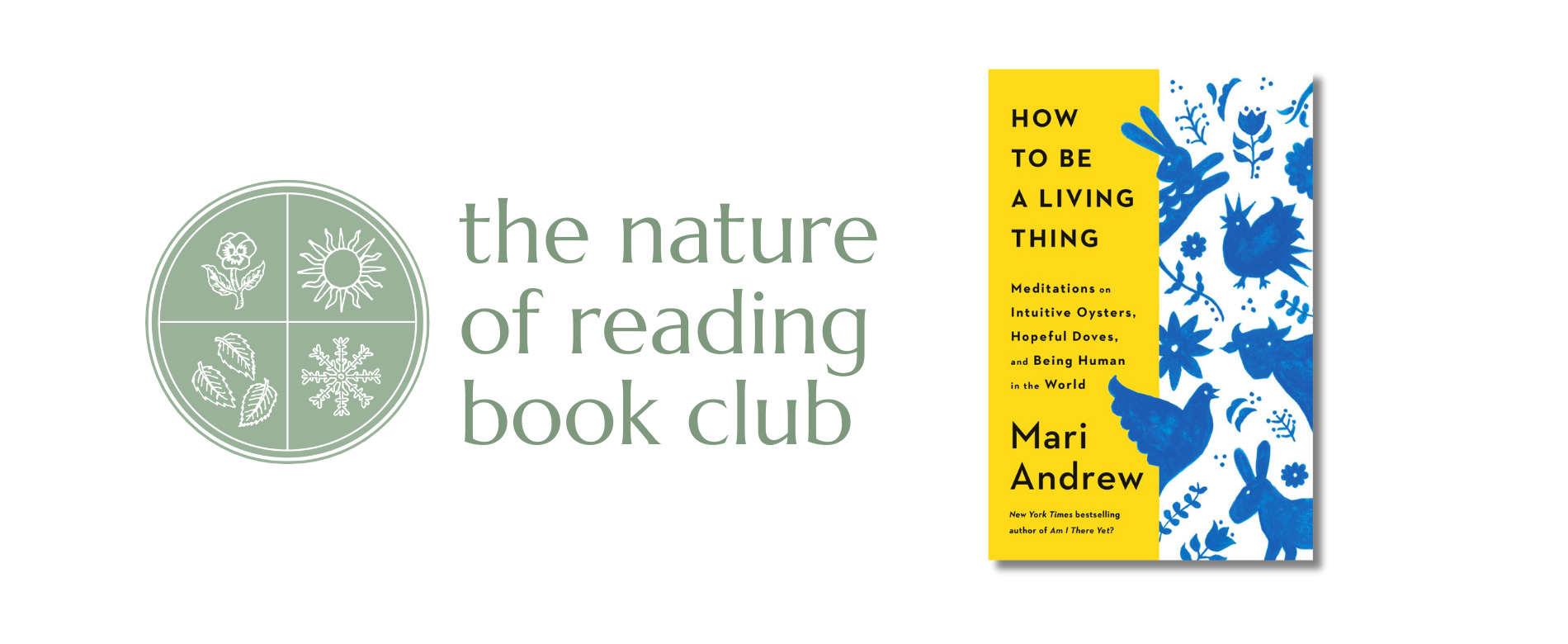
We’re back with the next installment of The Nature of Reading Book Club! Join us on October 21st to discuss Mari Andrew’s How to Be A Living Thing: Meditations on Intuitive Oysters, Hopeful Doves, and Being Human in the World. Since it seems more confusing than ever to exist as a human these days, I’m so looking forward to discussing what we can learn from the non-human world and further strengthening our ties with nature. Get your ticket for the book club meeting and pick up the book at the shop or have it shipped to you.

We’ve been on a break due to the shop move, but fear not—Attending Together will be resuming soon with the release of our discussion of Jenny Odell’s works! Order your copies of How to Do Nothing and Saving Time and read along with us.r intuition and follow the signs and synchronicities of the natural world.

Now that it’s finally cold here in NJ, it’s the perfect time to really lean into the Halloween season with some spooky stories. Pick up The Big Book of New Jersey Ghost Stories to learn more about the ghosts that inhabit your town or county—there is a particularly chilling tale from Morristown, right next door to Madison. Through the Woods is an annual recommendation of mine—a collection of illustrated stories that are spooky enough to be unsettling but not too scary to interfere with sleep for people particularly prone to fright (like yours truly). Another favorite of mine is Never Whistle at Night, which contains a glimpse of the rich tapestry of indigenous stories, perfectly curated for the spooky season. Check out these scary stories and other autumnal reads at the shop or here on our website.


Hauntings lurk and spirits linger in the Garden State Reader, beware! Turn these pages and enter the world of the paranormal, where ghosts and ghouls alike creep just out of sight. Authors Patricia A. Martinelli and Charles A. Stansfield Jr. shine a light in the dark corners of New Jersey and scare those spirits out of hiding in this thrilling collection. From what may lurk in the Ramapo Mountains, to a ghostly little boy who waits on Clinton Road, and the fabled Jersey Devil itself, these stories of strange occurrences will keep you glued to the edge of your seat. Around the campfire or tucked away on a dark and stormy night, this big book of ghost stories is a hauntingly good read.
ourney through the woods in this sinister, compellingly spooky collection that features four brand-new stories and one phenomenally popular tale in print for the first time. These are fairy tales gone seriously wrong, where you can travel to “Our Neighbor’s House”—though coming back might be a problem. Or find yourself a young bride in a house that holds a terrible secret in “A Lady’s Hands Are Cold.” You might try to figure out what is haunting “My Friend Janna,” or discover that your brother’s fiancée may not be what she seems in “The Nesting Place.” And of course you must revisit the horror of “His Face All Red,” the breakout webcomic hit that has been gorgeously translated to the printed page. Already revered for her work online, award-winning comic creator Emily Carroll’s stunning visual style and impeccable pacing is on grand display in this entrancing anthology, her print debut.
Many Indigenous people believe that one should never whistle at night. This belief ranges far and wide and takes many forms: for instance, Native Hawaiians believe it summons the Hukai’po, the spirits of ancient warriors, and Native Mexicans say it calls Lechuza, a witch that can transform into an owl and snatch the foolish whistlers in the dark. But what all these legends hold in common is the certainty that whistling at night can cause evil spirits to appear—and even follow you home. In twenty-seven wholly original and shiver-inducing tales, bestselling and award-winning authors including Tommy Orange, Rebecca Roanhorse, Cherie Dimaline, Morgan Talty, Waubgeshig Rice, and Mona Susan Power introduce readers to ghosts, curses, hauntings, monstrous creatures, complex family legacies, desperate deeds, and chilling acts of revenge. These stories are a celebration of Indigenous peoples’ survival and imagination, and a glorious reveling in all the things an ill-advised whistle might summon.



Recently we refreshed our display of one of my favorite items at the shop—these handmade beeswax candles from Happy Organics! The pick your own cherries box (foraged from deep basement storage and originating years ago in my childhood bedroom) perfectly fits the boxes of these delightful berry birthday candles, pictured close-up on the right. In the leftmost picture, this week our bookseller Alison brought in the most lovely basket to display the larger produce-shaped candles. Could they look any more delightful? Stop by the shop and let me know which veggie or fruit candle is your favorite.