

Filling the Well
The Nature of Reading Newsletter | Summer | Week 2

Dear readers,
Happy Sunday! Amidst another busy week, I’ve been thinking more often about filling the well of creativity, a concept I periodically return to since reading Julia Cameron’s The Artist’s Way.
Cameron writes about the sources within us from which we draw art, our reserves of creativity. Particularly fitting given our recent book club read, I’ve always enjoyed her imagining of our inner creativity as an underground river which we can sink down into at any time. Creativity as river, as well water, as a sudden storm—water in its many forms always seem to be the preferred metaphor for the ever-changing mysteries of creative inspiration.
Filling the well of creativity means seeking experiences filled with magic, having grand adventures or appreciating subtle moments that inspire awe and wonder. It may be hard to find such moments when we’re stuck in our daily routines, so Cameron recommends weekly artist’s dates with yourself, doing something you love or visiting somewhere whimsical that has brought you inspiration in the past.
For me, the first half of 2025 has been heavy with a mix of great tragedies and unwieldy joys. Through it all, partly out of necessity and partly as a survival instinct, I’ve stayed focused on tangible goals: moving apartments, moving shops, renovating the new shop, filling the shelves. Now that a few months have passed since the beginning of the shop move and we’ve had weeks of help from our wonderful summer intern Jo, I’ve started to think about carving more room for wonder into my weeks.
That is what I plan to do today: seek magic. Find wonder. Fill the well. And that is what I invite you to do as well, dear newsletter reader. Join me as we dip into the wells of magic and creativity to help balance the difficulties of the world we find ourselves in. In seeking out environmental and social justice and the healing of our planet, ours is a lifelong fight—we must fill our reserves of magic and wonder to help guide us through dark times.
And with that, for once, I aim to follow my own ramblings and go seek wonder! Thank you for being here with me this Sunday morning, and I hope you join me today in the search for magic.
All best wishes,
Hailey


Time for the next iteration of the lovely cross-stitch birds we’ve been working our way through over the past year! Whether you’ve cross-stitched with us for the spring, fall, or winter birds or whether it’s your first time, I’m happy to help all levels of crafters get started on this sweet cross-stitch project as we sip soothing cups of herbal tea. There’s a limited number of seats, so do get your ticket now if you know you’d like to attend! Grab a friend and join us for this wholesome evening of crafting, tea, and great company.
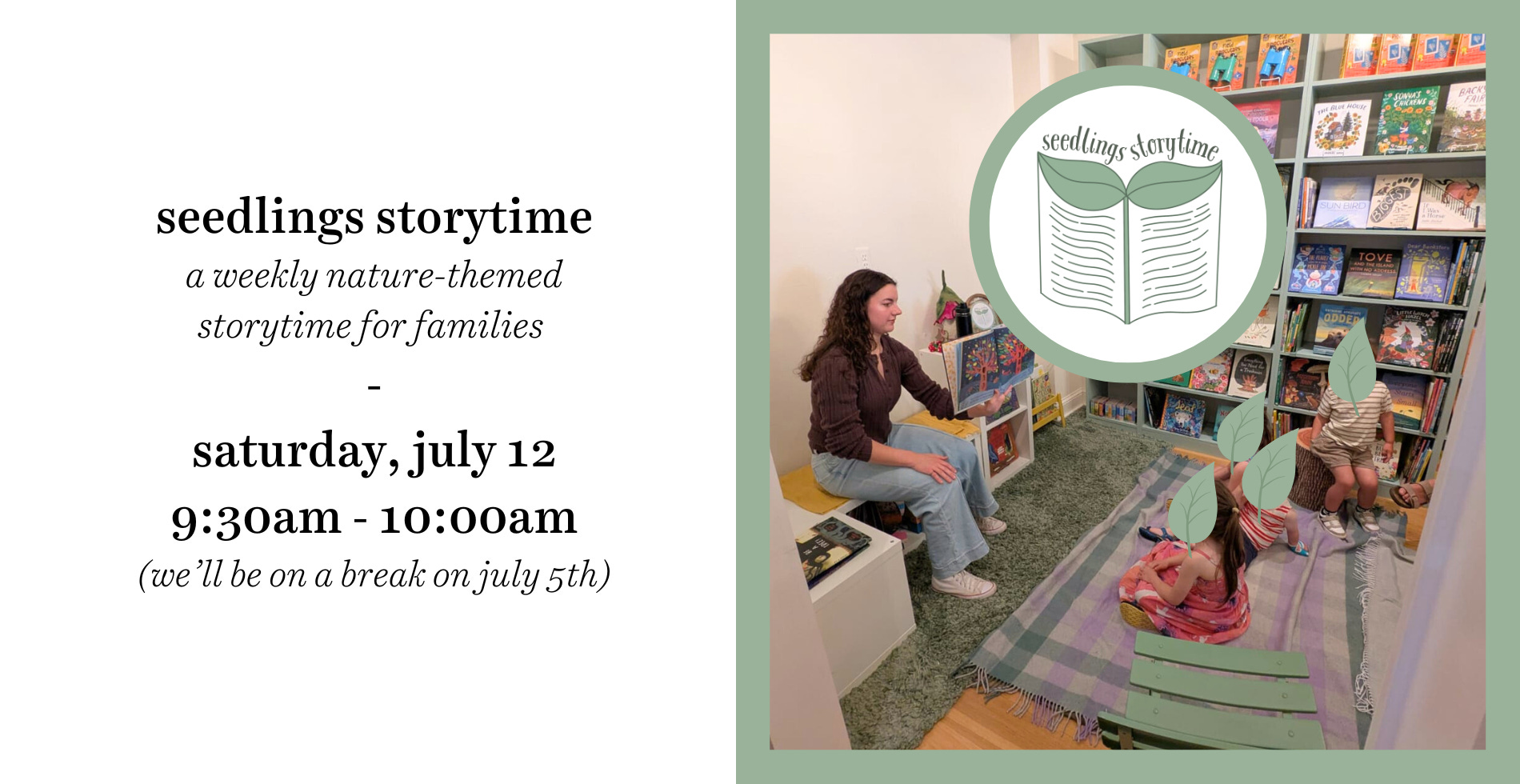
We’d love for you to join us for the next Seedlings Storytime! We’ll be on a break next Saturday, July 5th, because of the holiday weekend (though we will be open regular hours at the shop!). Join our bookseller Jo on Saturday morning, July 12th as she reads picture books to the kids. The storytime is recommended for 5-year-olds and younger, but all are welcome to attend, The event is free, but registration in advance is required (due to space, we can only fit about 4-6 families). We hope to see you there!
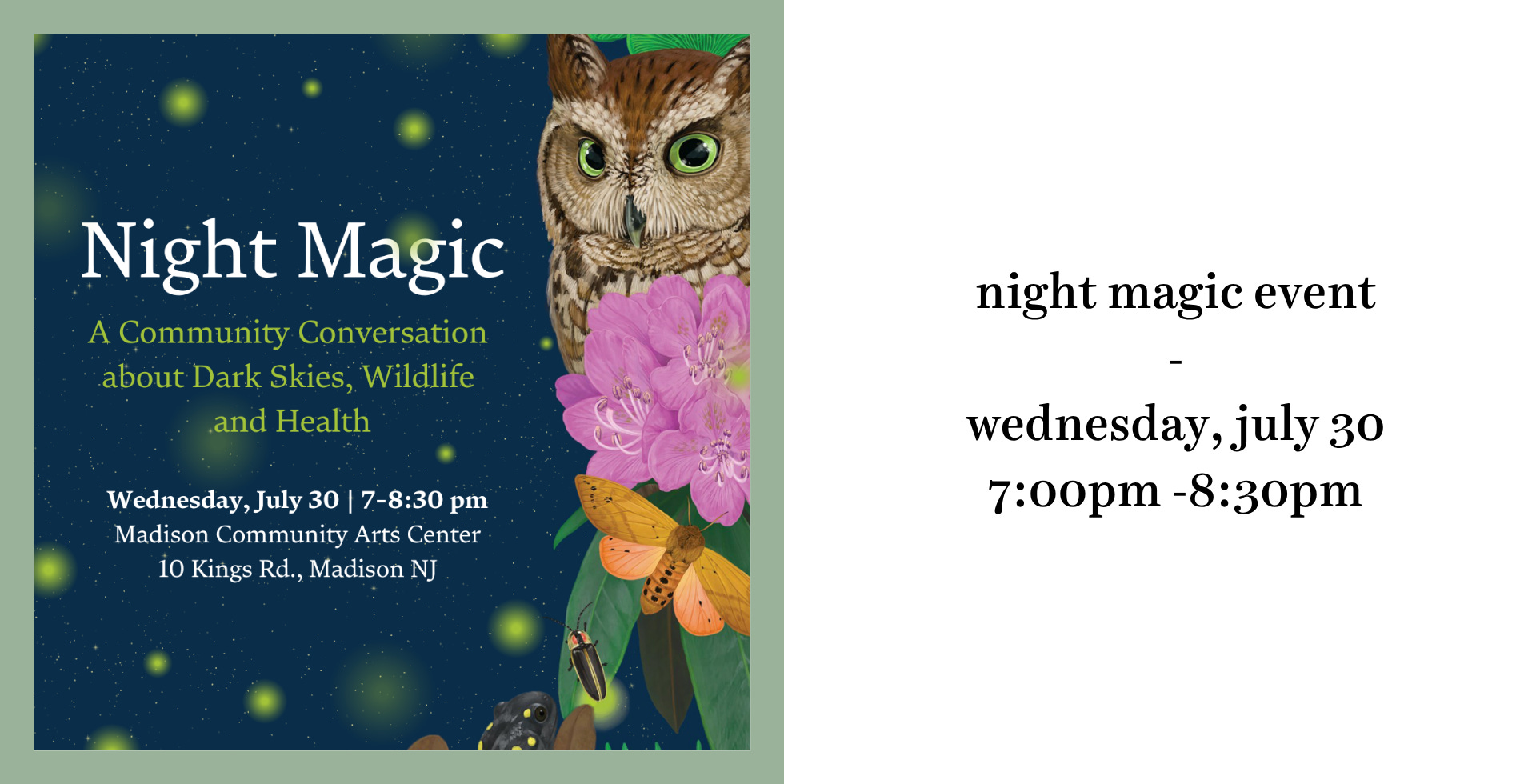
It’s time for our next joint event with the Madison Environmental Commission—join us on July 30th for a dark and mysterious discussion based on the book Night Magic by Leigh Ann Henion. After the book club meeting on Tuesday, July 29th, join us the following evening for a conversation with incredibly knowledgable panelists and a lengthy Q&A session where you can get any of your questions answered. With panelists speaking about bats and owls, fireflies and moths, salamanders and amphibians, and dark skies and human health, this is sure to be an event you won’t want to miss.



Moss is known as the living carpet but if you look really closely, it contains an irrepressible light. In Twelve Words for Moss, Elizabeth-Jane Burnett highlights this often forgotten but vital foundation of the plant world with her unique blend of poetry, nature writing and memoir. Making her way through wetlands from Somerset to Country Tyrone, Burnett discovers the hidden vibrancy of these overlooked spaces, renaming her favourite species of moss as she recovers from grieving her father’s death, spurred on by the resilience and tenacity of her plant - and human - friends.
In The Place of Tides, a magical work of nonfiction, James Rebanks reflects on a life-changing summer spent on a remote island off the coast of Norway, where his only companion was an old woman who practiced the ancient tradition of collecting eiderdown from birds that nest on this remarkable landscape each year. One afternoon many years ago, Rebanks met this old woman on a trip, and after returning home he couldn’t stop thinking about her. Then, one day, he wrote her a letter, asking if he could return. She told him to come quickly, as her health was failing. And so he travelled to the edge of the Arctic to witness her last season on the island. This is the story of that season. It is the story of a unique and ancient landscape, and of the woman who brought it back to life. What begins as a journey of escape for Rebanks becomes an extraordinary lesson in self-knowledge and forgiveness.
A captivating exploration of climate change that uses nine different emotions to better understand the science, history, and future of our evolving planet. Scientist Kate Marvel uses computer models to study climate change, where it’s easy to simulate rising temperatures, catastrophic outcomes, and bleak futures. Human Nature is a deeply felt inquiry into our rapidly changing Earth. In each chapter, Marvel uses a different emotion to explore the science and stories behind climate change. As expected, there is anger, fear, and grief—but also wonder, hope, and love. Hopeful, heartbreaking, and surprisingly funny, Human Nature is a vital, wondrous exploration of how it feels to live in a changing world.


July’s book for The Nature of Reading Book Club is Night Magic by Leigh Ann Henion. Join us on a journey through the nighttime wonders found within your own backyard. There are a lot of exciting complementary events that are taking place the week of July’s book club meeting—we’ve announced our event with the MEC, but there’s even more excitement coming soon! For now, get your ticket for the book club meeting and pick up the book at the shop or have it shipped to you.

We’ve been on a break due to the shop move, but fear not—Attending Together will be resuming this July with the release of our discussion of Jenny Odell’s works! Order your copies of How to Do Nothing and Saving Time and read along with us.



This is How You Lose the Time War by Amal El-Mohtar and Max Gladstone
Hailey says: “After loving The River Has Roots, I’ve just started This is How You Lose the Time War. Told largely in an epistolary form inter-spliced with brief, mysterious passages hinting at larger epic maneuverings, the many worlds and the two main characters have been slowly crystallizing in my mind as I continue reading. I’m only about halfway through, so you’ll have to wait until my final review after I get to the end of the book, but there’s one thing I know for sure—I can’t get enough of Amal El-Mohtar.”
The Unworthy by Agustina Bazterrica
Jo says: “Bazterrica’s The Unworthy, categorized as a literary horror, follows an unnamed narrator through her time in a secluded religious order while the outside world has fallen into a climate disaster. The novel unfolds as the narrator writes the story of her life within the convent, called the Sacred Sisterhood, and the narrative voice throughout the story is unique. Told through a series of journal entries, we get to see the narrator grapple with the violence and mystery within the convent and be haunted by fleeting memories of her life before the Sisterhood. The Unworthy is on the shorter side and keeps you gripped for its entirety, as you experience the narrator’s struggle to either surrender to or escape the sinister nature of the convent.”
The Island of Missing Trees by Elif Shafak
Alison says: “A magical love story with the most unusual of narrators: a fig tree. Young Ada, growing up in London, is struggling after the death of her mother. We learn her parent’s backstory, their forbidden love as teenagers on the war torn island of Cyprus, their forced separation and the toll that this takes on the rest of their lives. The fig tree bears witness to it all and describes it in the most moving and beautiful way. It is one of the most imaginative books I have read! I always enjoy a love story but this was so much more; a history lesson, a study of family and human connection and a deep appreciation of the wonders of the natural world. I will never think of trees in the same way again!”

In honor of the book club book this past month—Is A River Alive? by Robert Macfarlane—here are some more recommendations for books about rivers! After you’ve read Is A River Alive?, James Scott’s book is the best way to continue to learn more about the environmental benefits of untamed rivers and how humans have negatively intervened (and continue to do so) with rivers’ vitality in the past. If you’re looking for a story where a river is a lively character itself, you must try The River Has Roots, a recent favorite of mine—the wonder of rivers is abundant throughout the story. Lastly, They’re in the River is part of a beautiful new series from Picador Shorts about Oceans, Rivers, and Streams, and in this selection John McPhee discusses his life as a fisherman and the way shads and rivers interact.


James C. Scott reframes rivers as alive and dynamic, revealing the consequences of treating them as resources for our profit. Rivers, on a long view, are alive. It is the annual flood pulse—the brief time when the river occupies the floodplain—that gives a river its vitality, but it is human engineering that kills it, suppressing the flood pulse with dams, irrigation, siltation, dikes, and levees. In demonstrating these threats to the riverine world, award-winning author James C. Scott examines the life history of a particular river, the Ayeyarwady (Irrawaddy) of Burma, the heartland and superhighway of Burman culture. For anyone interested in the Anthropocene and the Great Acceleration, rivers offer a striking example of the consequences of human intervention in trying to control and domesticate a natural process, the complexity and variability of which we barely understand.
The hugely anticipated solo debut of New York Times bestselling author and Hugo Award winner Amal El-Mohtar, a story of two sisters separated by worlds, desires, and even death, who never let go of their love. What the town of Thistleford gained from its proximity to Faerie was obvious—prosperity, merriment, uncommonly good weather. What it lost was negligible—the cost of doing business. Until it wasn’t. An enchanting story of two sisters, heirs to an extraordinary stewardship on the edge of Faerie, and what happens when one of them falls in love with someone from the land beyond.
John McPhee, a shad fisherman, recounts the fascinating life and ways of the iconic and most curious American shad, in this pithy, humorous, and illuminating standalone extract from his twenty-sixth book, The Founding Fish. McPhee opens with a tall tale about his long vigil with a giant roe shad on the line. Night falls, a crowd gathers on a nearby bridge to watch and still the fish refuses to roll over; however embellished, it’s a comic story. He fishes and visits the laboratories of famous ichthyologists; he takes instruction in the making of shad darts from a master of the art; he delivers a moving treatise on the particular sound that is unique to every river. In the process, he creates a portrait of America’s great waterways and of one of their most storied residents.

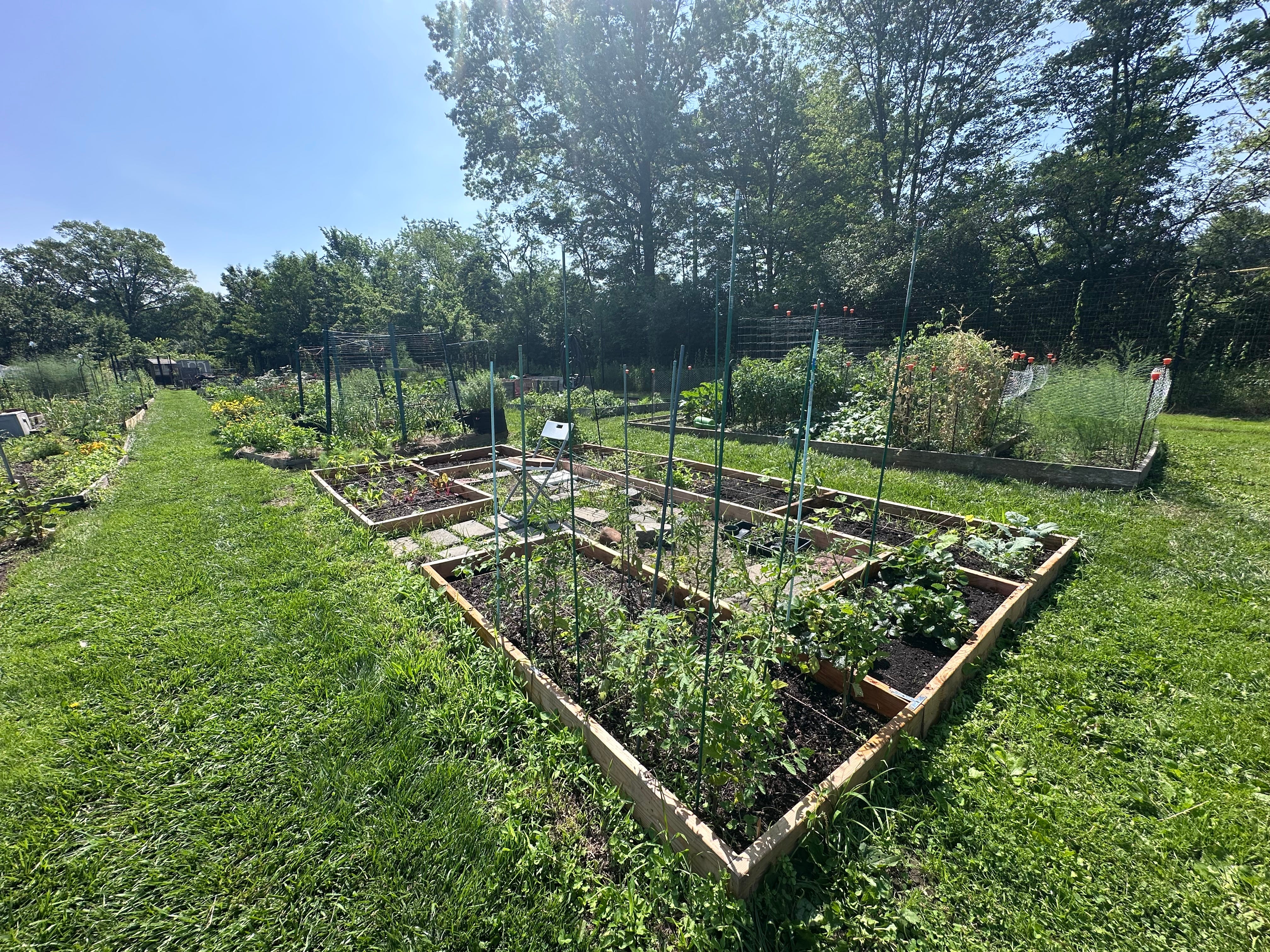
It’s another shot of our community garden! Even though I’ve been so busy lately (we’ve named our plot Busy Bee Garden, after all) it’s always wonderful to have the garden to return to for a few minutes of quiet nature time and peaceful companionship with the other gardeners. Soon we’re starting a project I’ve wanted to for a while—making a stone mosaic for the walking area in the center of the plot. If it goes well, I’ll update you with a new photo in a few weeks…