

As Temperatures Rise
The Nature of Reading Newsletter | Summer | Week 1

Dear readers,
I hope you’re staying cool today as we enter the first hours of an extreme heat wave set to last the next few days here in New Jersey. Our new storefront has some of the strongest AC in all of Madison—if you need to cool off this week, please drop by the store and hang out for a bit.
It feels tough to write today, when the reality of climate change is manifesting itself so forcefully in our surroundings, and the endless unraveling of bad news on a national and international scale seems to be happening faster than ever. The skies are dark here in Madison, where thunderstorms keep threatening to burst through the thick layer of cloud.
What is there to do in times like these, when the global polycrisis we find ourselves in seems too much to bear? As always, I keep coming back to one thing: focusing on our local communities. Engaging with the internet and especially social media can feel uncomfortably disempowering at the best of times and absolutely heartbreaking at the worst. I continue to pour energy into sustaining a reserve of hope, but it is near to impossible at the moment to to feel any sort of confidence in our federal political systems. While we still need to fight fascism’s resurgence in our country and our world—through protests, calling representatives, signing petitions, making donations and more—in order to maintain hope in our collective future, we need to balance these larger organized activities with actions where we can see tangible change taking place.
Since starting the shop, I’ve been blown away with the countless people I’ve met who are working towards shared goals of improving the wellbeing of our planet and our fellow human beings. Even in a small town like Madison, there are thousands of people who genuinely care about our world.
When opening social media for even thirty seconds feels like a swift descent into a bottomless well of despair, we can find the antidote in both the human and non-human world around us. Little things like spotting a bird, having a conversation with a stranger at the grocery store, or stepping outside into the rain can help recenter us in our bodies and remind us of exactly where we find ourselves in space and time. As we steady ourselves in our surroundings, we can seek out local groups that are working on the causes we care about most (such as the Madison Environmental Commission, Mutual Morris, and Grow it Green if you live locally) where we can take part in the ways we’re able and help make tangible, motivating change.
It’s okay to sit for some time in the knowledge of how bad things are, but the allures of cynicism will never reward us in the end. It is only through the ceaseless, messy, glimmering fight towards hope where we can come together and begin to imagine a different future for ourselves.
If you’re finding everything a lot to bear these days, know that you’re not alone. Stop by the shop any time to chat with us for some inspiration/commiseration, or check out our Activism and Climate Change sections to read more about our changing world.
With that, please stay cool over the next few days, and we’ll see you back here next week.
All best wishes,
Hailey


Time for the next iteration of the lovely cross-stitch birds we’ve been working our way through over the past year! Whether you’ve cross-stitched with us for the spring, fall, or winter birds or whether it’s your first time, I’m happy to help all levels of crafters get started on this sweet cross-stitch project as we sip soothing cups of herbal tea. There’s a limited number of seats, so do get your ticket now if you know you’d like to attend! Grab a friend and join us for this wholesome evening of crafting, tea, and great company.
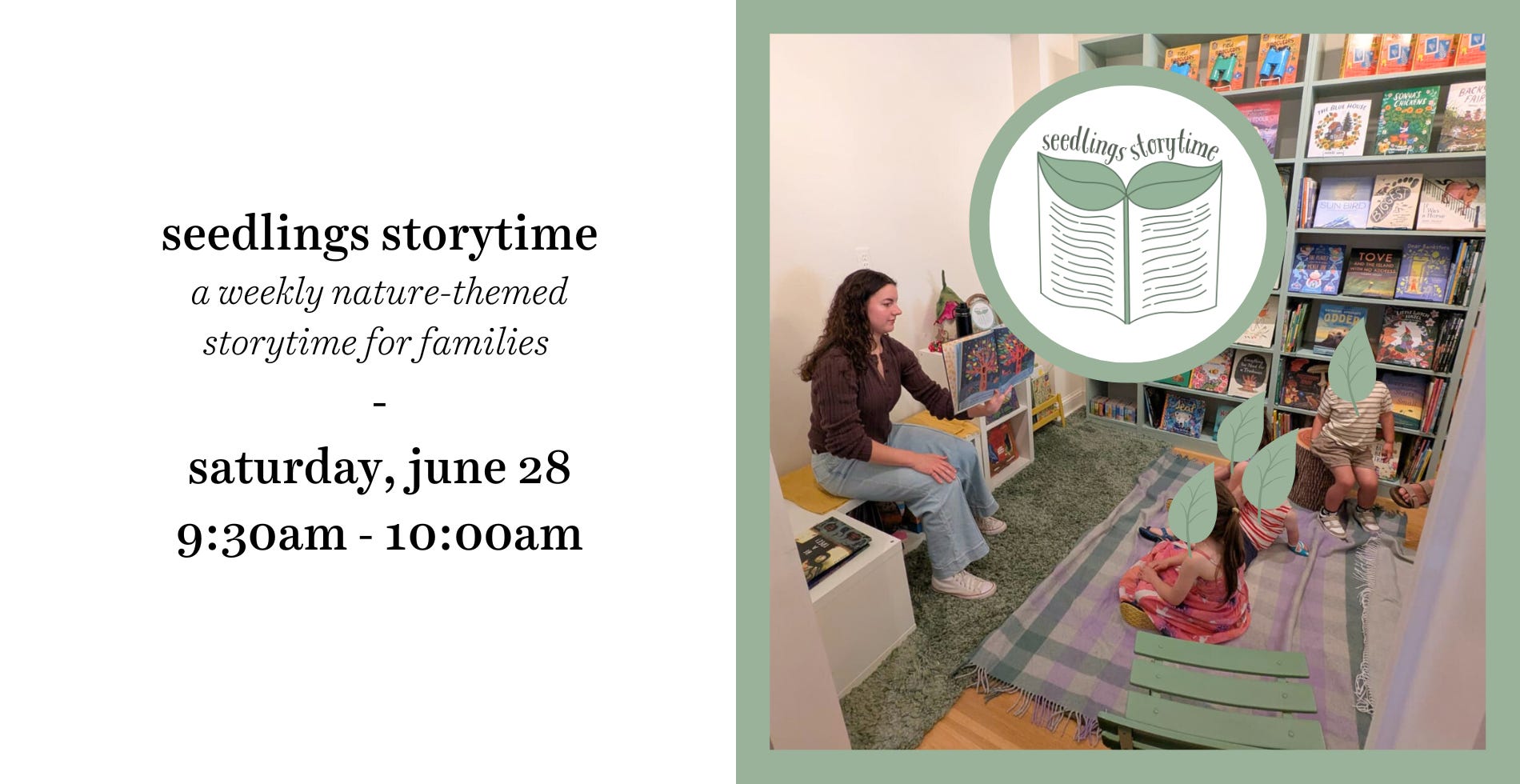
Thanks so much to all the families that came out for our first ever Seedlings Storytime yesterday! If you didn’t make it, fear not—this nature-themed storytime is now a weekly event. Join our bookseller Jo on Saturday mornings each week as she reads picture books to the kids. The storytime is recommended for 5-year-olds and younger, but all are welcome to attend, The event is free, but registration in advance is required (due to space, we can only fit about 4-6 families). We hope to see you on Saturday!



An accessible foray into botany’s origins and how we can transform its future. Botany of Empire demonstrates how botany’s foundational theories and practices were shaped and fortified in the aid of colonial rule and its extractive ambitions. We see how colonizers obliterated plant time’s deep history to create a reductionist system that imposed a Latin-based naming system, drew on the imagined sex lives of European elites to explain plant sexuality, and discussed foreign plants like foreign humans. Banu Subramanian then pivots to imagining a more inclusive and capacious field of botany untethered and decentered from its origins in histories of racism, slavery, and colonialism. This vision harnesses the power of feminist and scientific thought to chart a course for more socially just practices of experimental biology. A reckoning and a manifesto, Botany of Empire provides experts and general readers alike with a roadmap for transforming the colonial foundations of plant science.
Learn to identify animals, plants, and fungi wherever you go with this step-by-step guide for spotting and recording key traits and characteristics. The Everyday Naturalist explains what traits to pay attention to when encountering a new species; how and when to use field guides, apps, and other resources; what to do if you get stuck; and more. Rather than focusing on one region or continent, these skills and tools are designed to help you classify nature anywhere you are—whether on familiar territory, traveling, or in a new home. This easy-to-follow guide empowers you to learn more about the species around you, then use what you know to preserve the world you love. And at a time when biodiversity is imperiled worldwide, nature needs more advocates than ever.
How to Read the Wilderness: An Illustrated Guide to the Natural Wonders of North America by The Nature Study Guild
This book invites you to see the natural world in all its intricacy and intense beauty and become a knowledgeable steward of the wild. From the mountains to the ocean shores, from the wetlands to the deserts, North America teems with flora and fauna in delicately balanced ecosystems found nowhere else on Earth. With this book in hand, you will understand the language of nature and see those wild places with new eyes. This volume celebrates a tradition of knowledge established by the Nature Study Guild. For more than sixty years, the Guild's pocket guidebooks have helped hikers, campers, foragers, and explorers navigate the great outdoors. Now, the best of the guides' informative text and iconic illustrations are gathered in one handsome hardcover: the perfect reference for today's ramblers.


July’s book for The Nature of Reading Book Club is Night Magic by Leigh Ann Henion. Join us on a journey through the nighttime wonders found within your own backyard. There are a lot of exciting complementary events that are taking place the week of July’s book club meeting—you’re in for a treat, but more to come on that next week! For now, get your ticket for the book club meeting and pick up the book at the shop from Tuesday onwards.

We’ve been on a break due to the shop move, but fear not—Attending Together will be resuming next month with the release of our discussion of Jenny Odell’s works! Order your copies of How to Do Nothing and Saving Time and read along with us.



The Book of Alchemy by Suleika Jaouad
Hailey says: “Like many people, I’ve struggled to make journaling into a nonnegotiable daily habit, despite how it’s been proven to me time and time again that I can only know what I’m truly thinking and feeling by writing it down. Suleika Jaouad’s latest book is filled with 100 pieces of writing from a whole range of authors and artists, all accompanied by journal prompts meant to inspire your own reflections. Sometimes the weight of the empty page is to intimidating to overcome, and this inspiring book helps provide some beginning structure to your morning pages or other journaling efforts.”
Calling for a Blanket Dance by Oscar Hokeah
Jo says: “Told in a multigenerational myriad of voices, Calling for a Blanket Dance tells the story of Ever Geimausaddle through the eyes of his many different family and community members. Hokeah’s debut follows Ever from adolescence through adulthood, culminating with a final chapter from his own perspective. The differing perspectives flowed almost seamlessly and it was interesting to see the picture of a character painted almost entirely from the outside. This novel explores Ever’s shifting sense of identity and culture, and what it means to be a part of a community.”

While we’ve always kept a couple foraging books in stock at the store, we’ve now officially made a Foraging section! Browse some of our top picks below and stop by the shop to see some other great foraging guides. If you have any recommendations of your favorite foraging books, we’d love to hear them!


Forage is a beautifully illustrated celebration of edible plants that can be found throughout the world. Anybody can enjoy the increasingly popular back-to-nature activity of foraging. Journeying through 50 globally populated edible plants, Forage explores the culture and history of our wild food. Stunning botanical illustrations by artist Rachel Pedder-Smith accompany each plant, alongside recipes inspired by the regions of the world where they are most celebrated.
Forager's Harvest: A Guide to Identifying, Harvesting, and Preparing Edible Wild Plants by Samuel Thayer
A guide to 32 of the best and most common edible wild plants in North America, with detailed information on how to identify them, where they are found, how and when they are harvested, which parts are used, how they are prepared, as well as their culinary use, ecology, conservation, and cultural history.
Foraging Pennsylvania and New Jersey: Finding, Identifying, and Preparing Edible Wild Foods by Debbie Naha-Koretzky
From cattails to wild garlic, this guide uncovers the edible wild foods and healthful herbs of Pennsylvania and New Jersey. Written for people who want to know more about foraging, including those who are absolute beginners and perhaps don’t even know where to start, this book provides clear photos and easy to follow instructions for plant identification. Readers will learn all about safely recognizing, respecting, and utilizing wild plants.

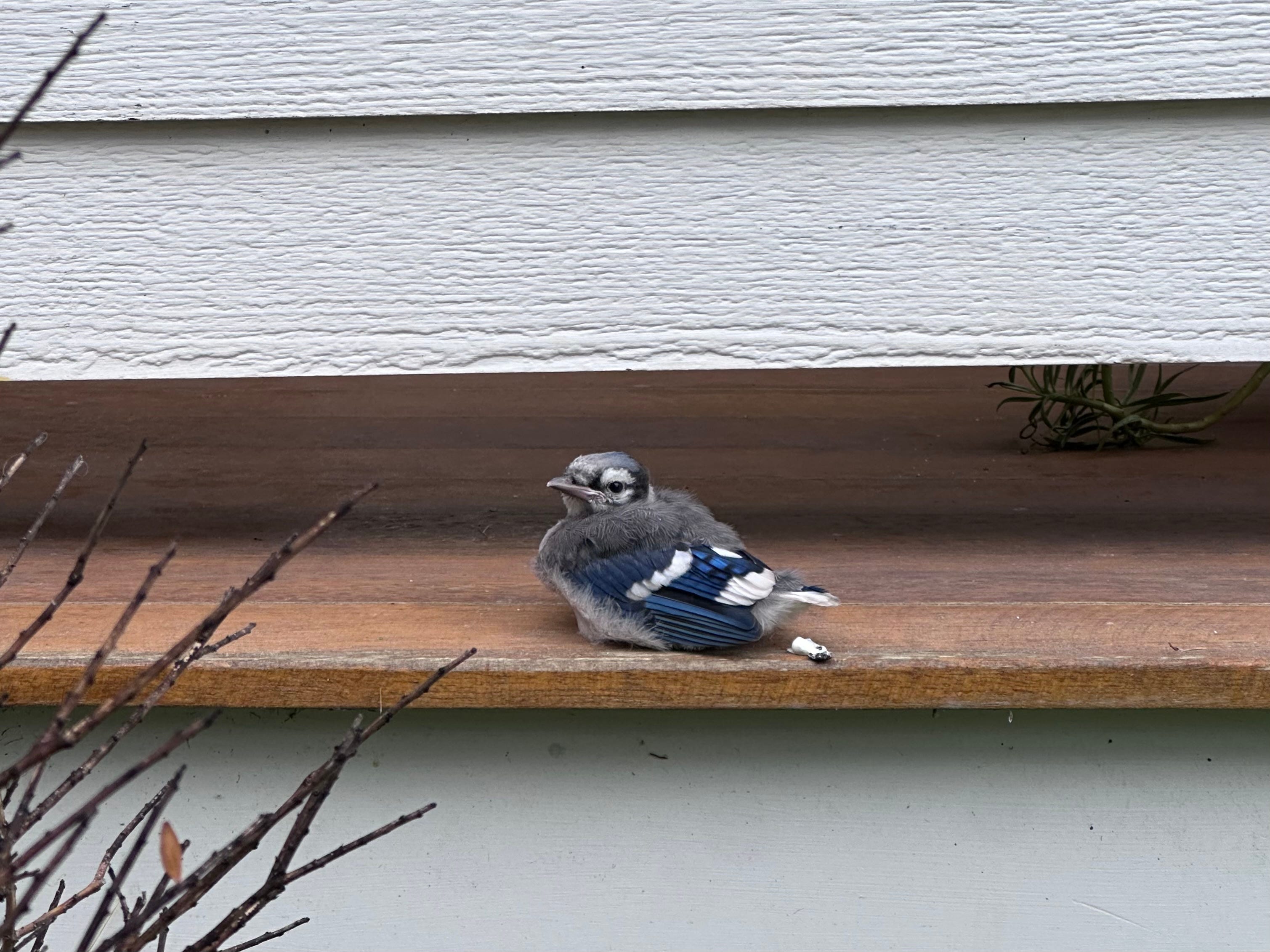
This sweet bluejay fledgling was perched upon the edge of our porch last weekend. I was worried that something was wrong when the fledgling didn’t move away from me, but they were able to turn a bit and their mom was screeching at me from a nearby branch. We went out for Father’s Day dinner and when we returned, the fledgling was gone. The next morning, I saw them once again, perched with their mom on a wire in front of our house. They had learned to fly!